
Botanical Art & Craft
Exploring the colourful botanical world of Justine Beaussart, floral designer
We are delighted to launch our series of Botanical Conversations, giving a voice to those whose work brings together botany and creation.
Our first conversation is with Justine Beaussart, floral designer and founder of Nebbia Studio, based in Annecy, France.
Justine has a vivid passion for singular floral varieties, unexpected colour harmonies and generous compositions, shaped by a modern, free-spirited style.
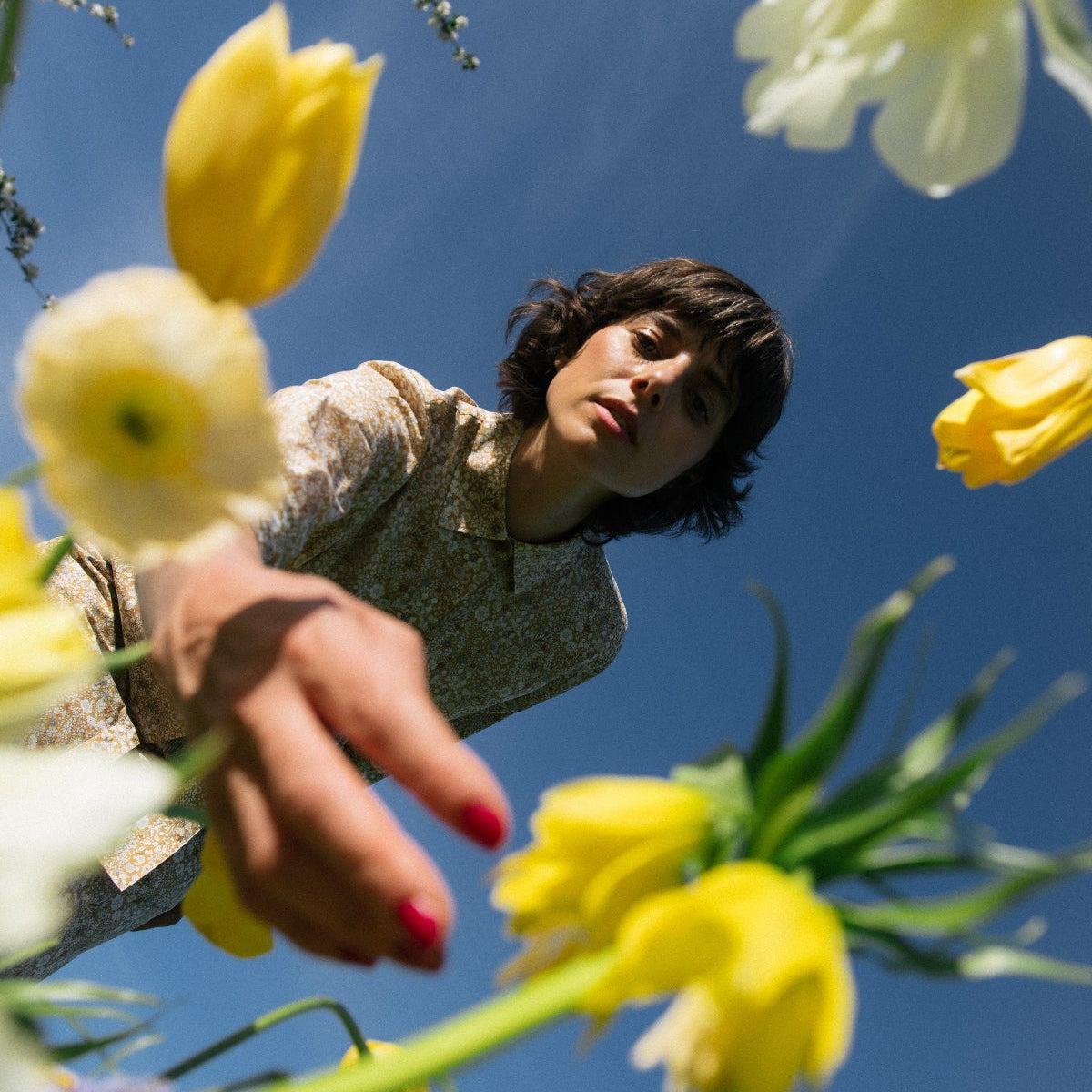
Colour plays an essential role in your work. How does a palette begin for you?
A palette is, above all, a narrative tool for me: it’s what allows a project to tell a story. It usually begins with an emotion, an intention, or an experience we want to bring to life.
At the moment, for example, I’m working on the colours for a wedding whose couple envisioned a slightly baroque, almost dramatic atmosphere. The main tone will be a deep burgundy, but we also wanted to introduce something surprising, contrasting and fresh. A sharp, acidic green brings exactly the kind of vibrant counterpoint that awakens the whole composition.
That is often how my palettes emerge. I try to bring together a strong emotional intention with a play of contrasts that creates a distinctive visual dynamic.
What most nourishes your eye on a daily basis?
I love talking with the people around me, understanding their projects, their challenges, what truly animates them. From these conversations, sometimes even without noticing it, intuitions, images and ideas emerge, and they later find their way into my work.
An architect friend, for instance, told me about a beautiful corridor she designed for a house, beginning between two gently undulating walls. That sense of movement guided me, almost instinctively, while setting up a scenography. Another example comes from a chef friend who serves an egg delicately marinated in red cabbage vinegar, paired with a very pale mayonnaise, a lilac and pastel-yellow harmony that I’ve sometimes carried over into my floral compositions.
I think this is what nourishes my eye: a circulation between the imaginations of the people around me, whose sensitivity I admire deeply.
In your practice, is there a gesture you are particularly fond of, for what it brings or for what it reveals about the flowers?
Yes, there is a gesture I am particularly fond of, and many floral designers in the event world know it well: blowing on the flowers. For events, flowers need to be perfect at a very specific moment, and by perfect, I mostly mean perfectly open. Sometimes you need to help them a little so they bloom at the right time.
Blowing gently on their petals is a soft way of waking them up, of encouraging them. And rest assured, I do not do this for every flower, only for those that occupy a central place, when I feel that this small gesture can reveal their full beauty.
Is there a book you particularly love to return to?
The one that comes to mind first is neither a picture book nor a practical guide. It is more philosophical in nature. It is called La Voie des Fleurs, by Gustie L. Herrigel.
The author studied ikebana in Japan, and what I love about this book is the way it approaches this ancestral practice not simply as a technique, but as a way of understanding the world: the relationship between human beings and nature, patience, attentiveness, detachment, and the search for harmony.
Is there a work that has accompanied you for a long time?
When I was twenty, I took a break from my studies and went to live in London for a year. One of the first things I did when I arrived was to visit the National Gallery to see Van Gogh’s Sunflowers again. I had discovered the painting as a child during a visit with my father, and I wanted to find it again the way one returns to a familiar face.
What I love most is that there are several versions of Sunflowers, scattered across different museums. I saw a second one in Amsterdam a few years ago. I still have three left to discover.
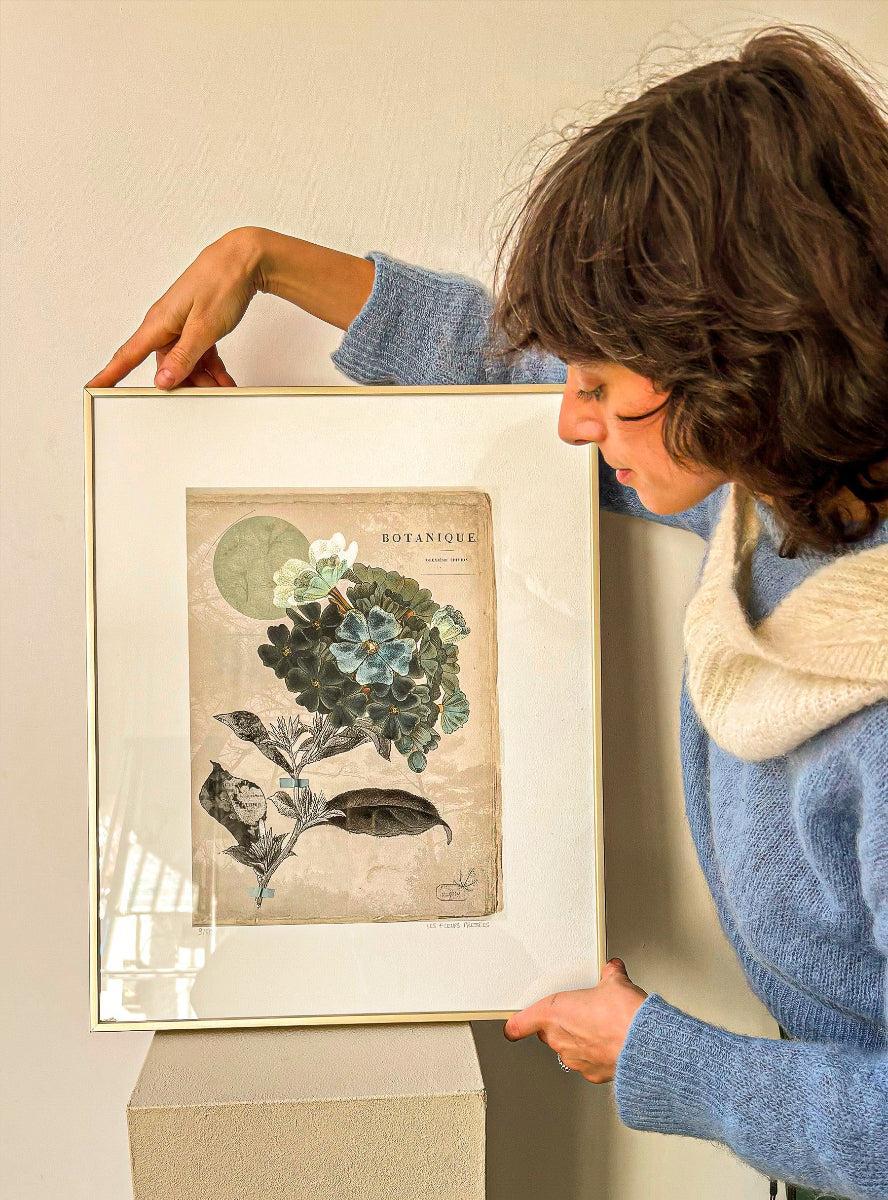
Justine with the artwork "Plumbago" by Les Fleurs Pressées .
What never ceases to move you in your work?
What will never stop moving me in my work is the way my relationship with flowers is both fleeting and cyclical. I meet them again season after season, then I have to let them go, with the joyful promise of finding them again the following year.
A place you love to return to when you need space or inspiration?
I grew up partly in the Queyras valley in the southern Alps, where some of my family still live. It is a region that holds a very special place in my heart. My favourite seasons there are spring and autumn.
In spring, when the snow melts, you come across true botanical marvels: wood anemones, fritillaries from the Dauphiné, poet’s narcissus, and a little later in the season, the martagon lily.
In autumn, the contrast between the orange larches and the blue sky reaches an incomparable beauty.
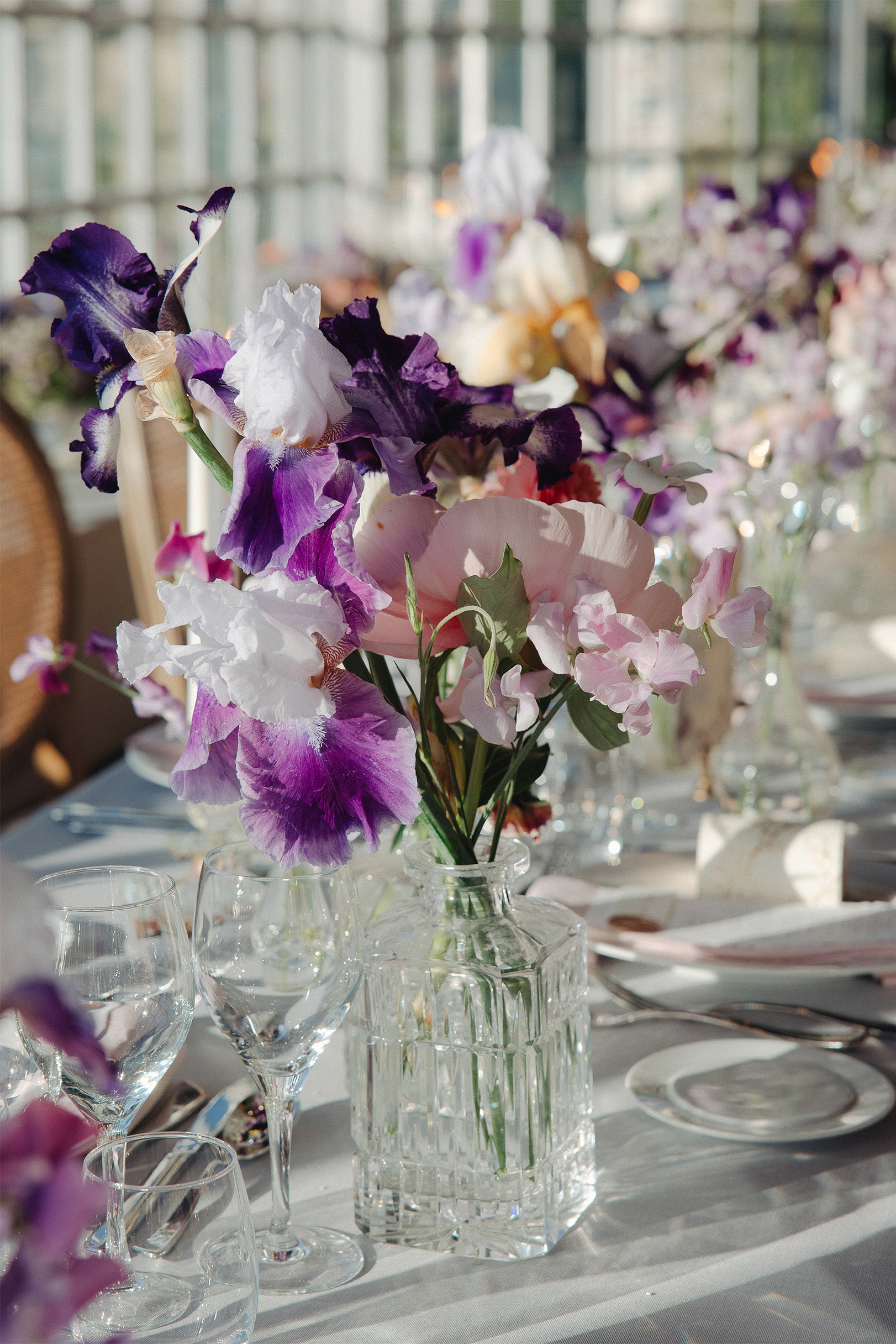
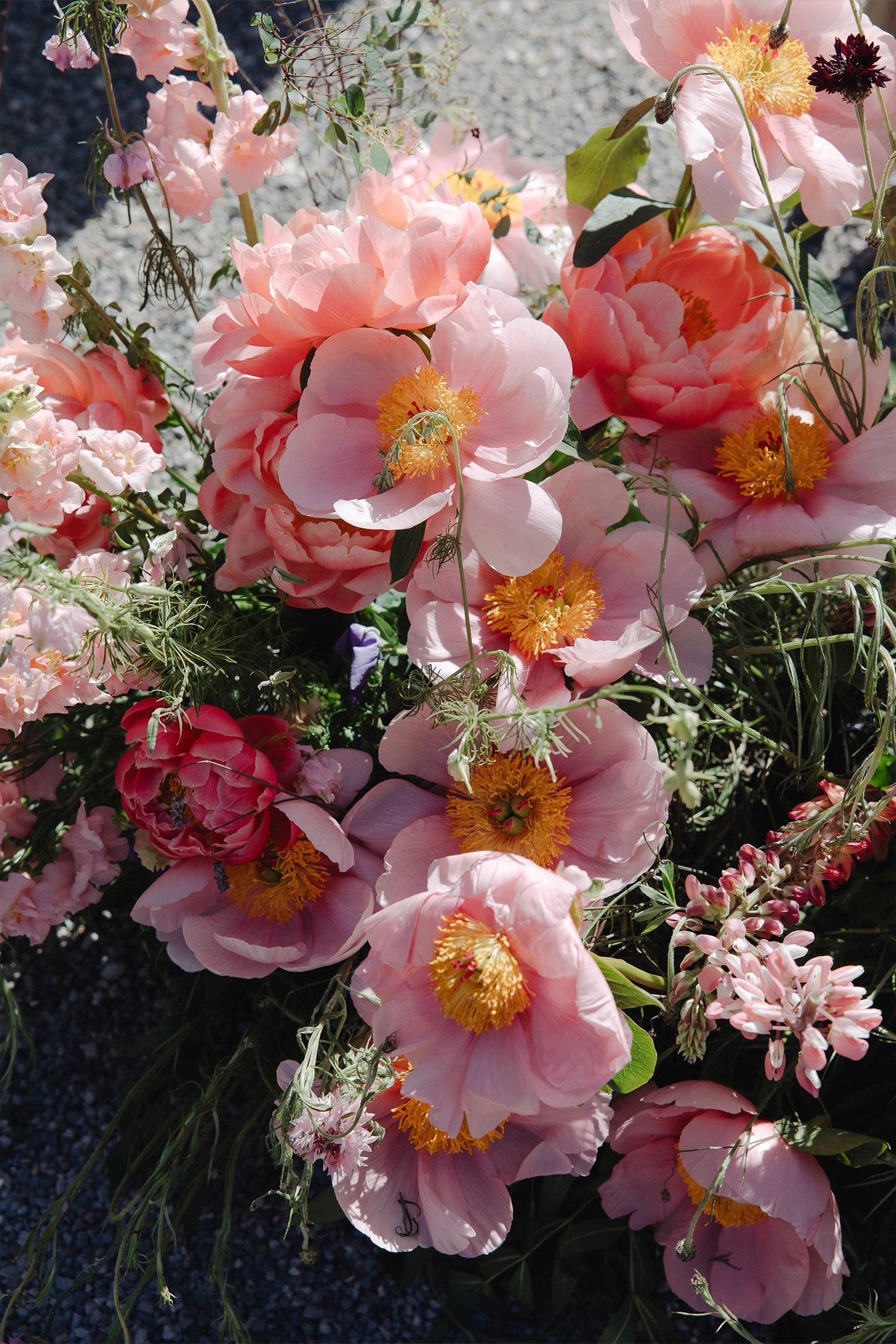
Could you tell us about a floral design project you particularly enjoyed recently?
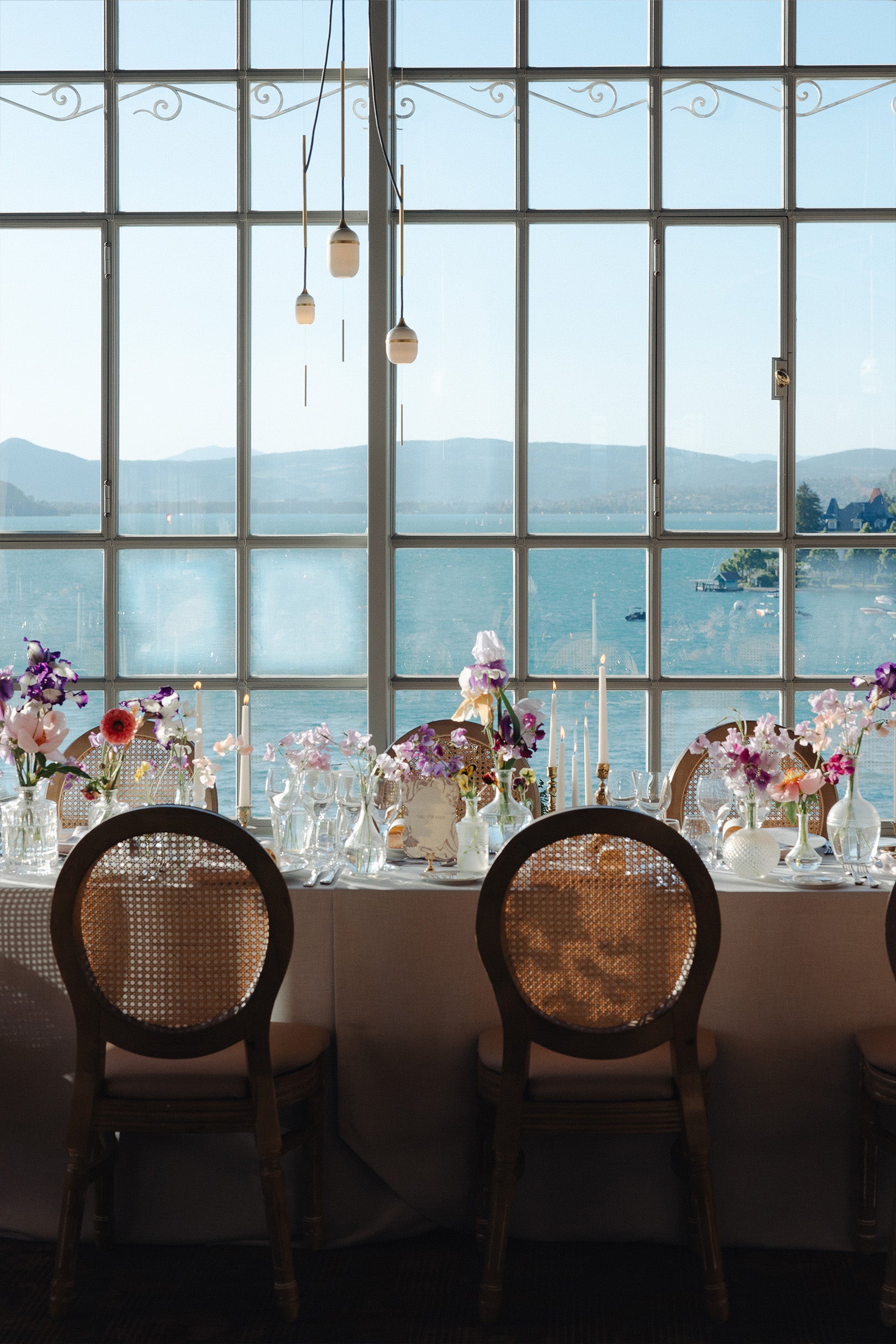
There is a project we worked on this year that left a strong impression on me: a wedding at the Palace de Menthon, a place I am very fond of and which offers a magnificent setting for floral creation.
For this wedding, we worked with a delicate palette built around violets, lilacs and soft pinks. This colour harmony held deep meaning for the couple. It echoed the town where the groom grew up, a place that hosts an annual lilac festival during which the whole town is dressed in mauve tones. The idea was to create a poetic and slightly nostalgic atmosphere, a gentle nod to his roots.
The ceremony took place under the Palace’s pavilion, where we installed a large, airy floral arch and a flower-lined aisle to welcome the guests. Under the art deco glass roof, the dinner unfolded around a long tablescape dotted with textured compositions.
We had the chance to work with flowers of exceptional quality: spectacular bearded irises and charming pansies grown by Clément and Claudine Bouteille, delicate sweet peas from the Brossard family, as well as peonies, campanulas and many other varieties.
Sourcing flowers is an essential part of our creative process. It is a step I deeply love and still cannot delegate, because it so strongly shapes the outcome of a project. That is where everything begins: finding the right varieties, in the right colours, with the right textures, the ones that will give each composition its character and emotion.
This wedding was a true pleasure to imagine and to bring to life, both for the beauty of the place and for the symbolism of the flowers and the richness of the collaborations.
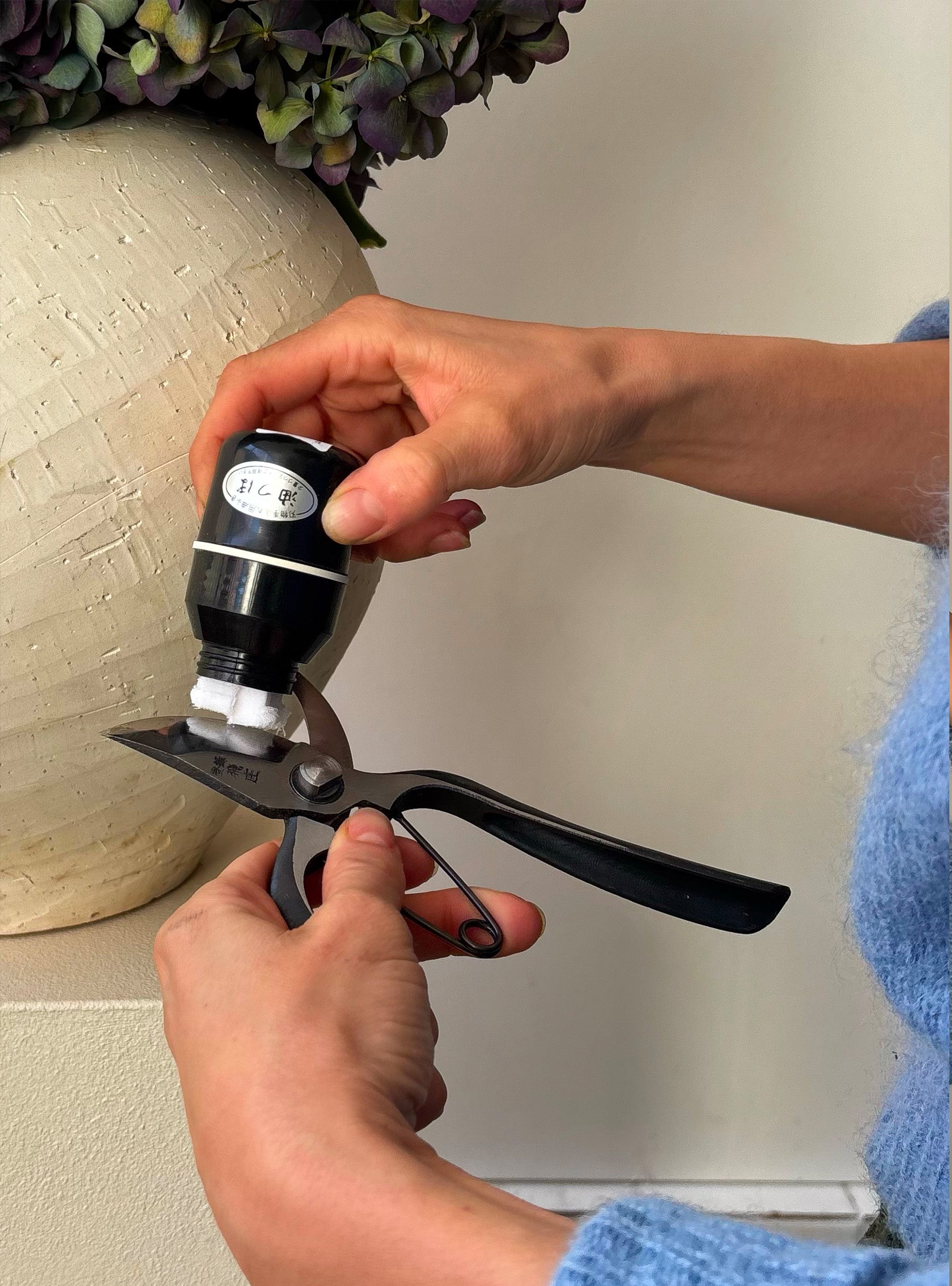
Justine with the Tobisho Japanese Secateur and the camellia oil applicator.
Quels sont vos outils favoris et pourquoi?
Sans hésiter la serpette et le sécateur, les deux indispensables du studio.
Ce sont des outils que je choisis toujours avec soin. Bien affûtés, agréables en main, ils deviennent presque une extension du corps et accompagnent chacune de mes compositions.
À l’atelier, je garde deux spécimens bien particuliers qui veillent sur moi comme des porte-bonheurs : la serpette de mon arrière-grand-père, Aïssa, un homme que je n’ai pas connu mais qui occupe une place importante dans mon panthéon familial, et le sécateur de la grand-mère de mon mari, qui m’a été offert par mon beau-père.
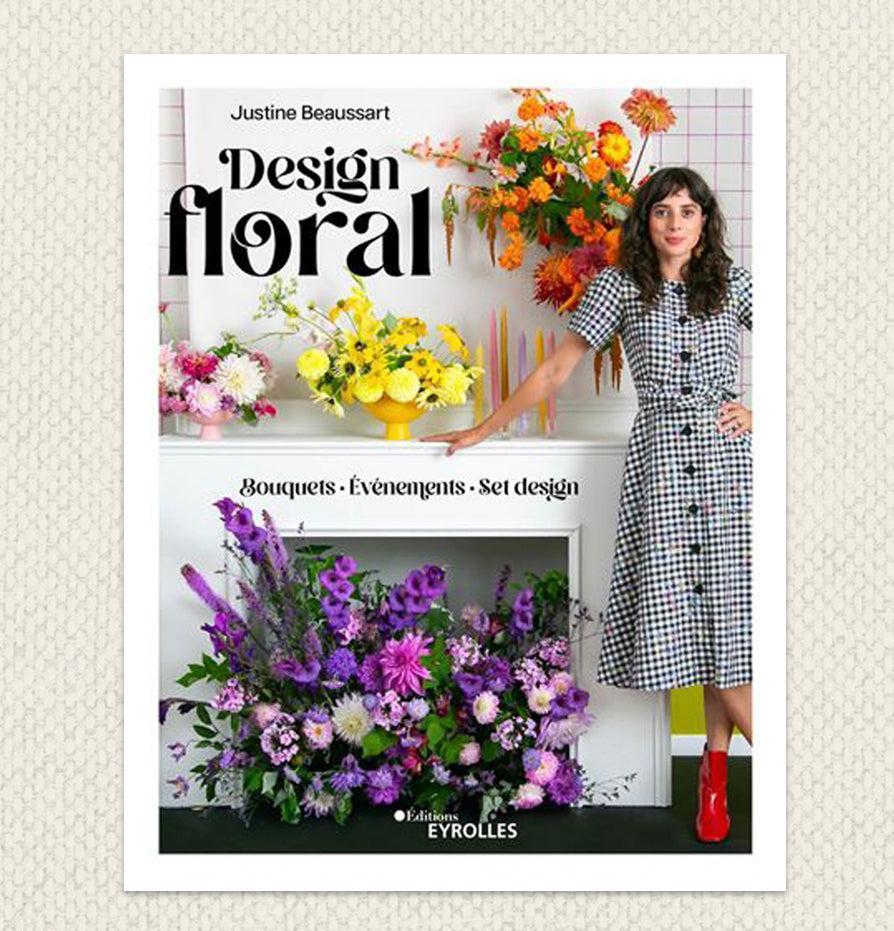
You have published a very comprehensive and educational book on floral design for future florists, you offer many workshops and courses, what do you most like to pass on to those who work with you?
What I love most to convey to the people I work with, or meet during workshops and classes, is confidence in themselves and their choices. In floral design, as in any creative practice, it's easy to doubt oneself or compare oneself to others. I try to show that every gesture, every decision, every composition has its legitimacy, and that it's important to dare to explore, experiment, and trust yourself.
Beyond techniques, I primarily want to provide the tools so that everyone feels capable of creating with freedom and authenticity, affirming their sensitivity and personal perspective.
Is there someone whose conversation you would love to read in this botanical format?
Marlène, from the flower farm Les Bâtisses in Dordogne. She is truly passionate about flowers, and she is fascinating when she talks about her work. I would love to read her conversation in this botanical format.
Thank you very much, Justine, for taking the time to answer our questions.
Nebbia Studio
Floral designer and stylist for private events and brands, based in Annecy
© Photographs by Kevin Deschamps (portrait of Justine), Alchemia (floral design project) and Studio Nebbia. All rights reserved, reproduction prohibited.