
Creation & Botanical Art
Discovering the botanical world of Audrey Demarre, embroiderer
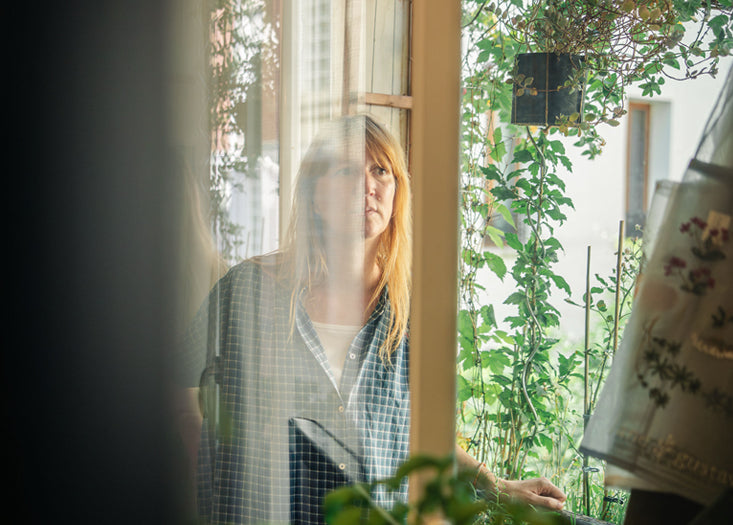
The second episode of our portrait series, Botanical Encounters, dedicated to those whose perspective blends botany and creativity. Here we meet Audrey Demarre, an embroiderer.
After twenty years spent in illustrated book publishing, she chose to dedicate herself to embroidery, which has drawn her since childhood. Her favorite subjects: women and nature in all its forms.
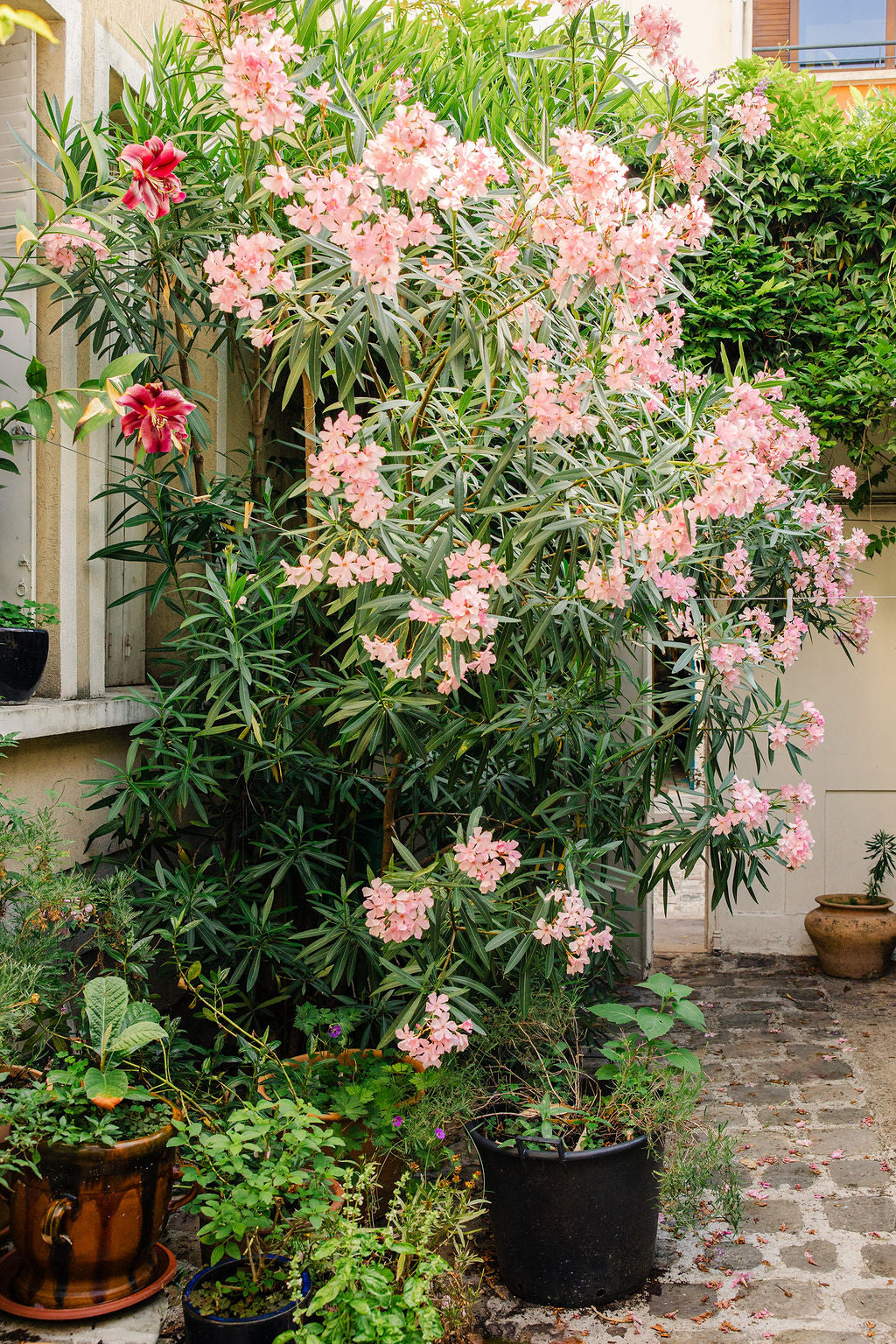
Audrey lives in Paris, in a cobblestone cul-de-sac that she and her partner have filled with flowers and greenery along with their neighbors, and which they maintain with care.
When you choose to embroider one plant over another, what guides that choice?
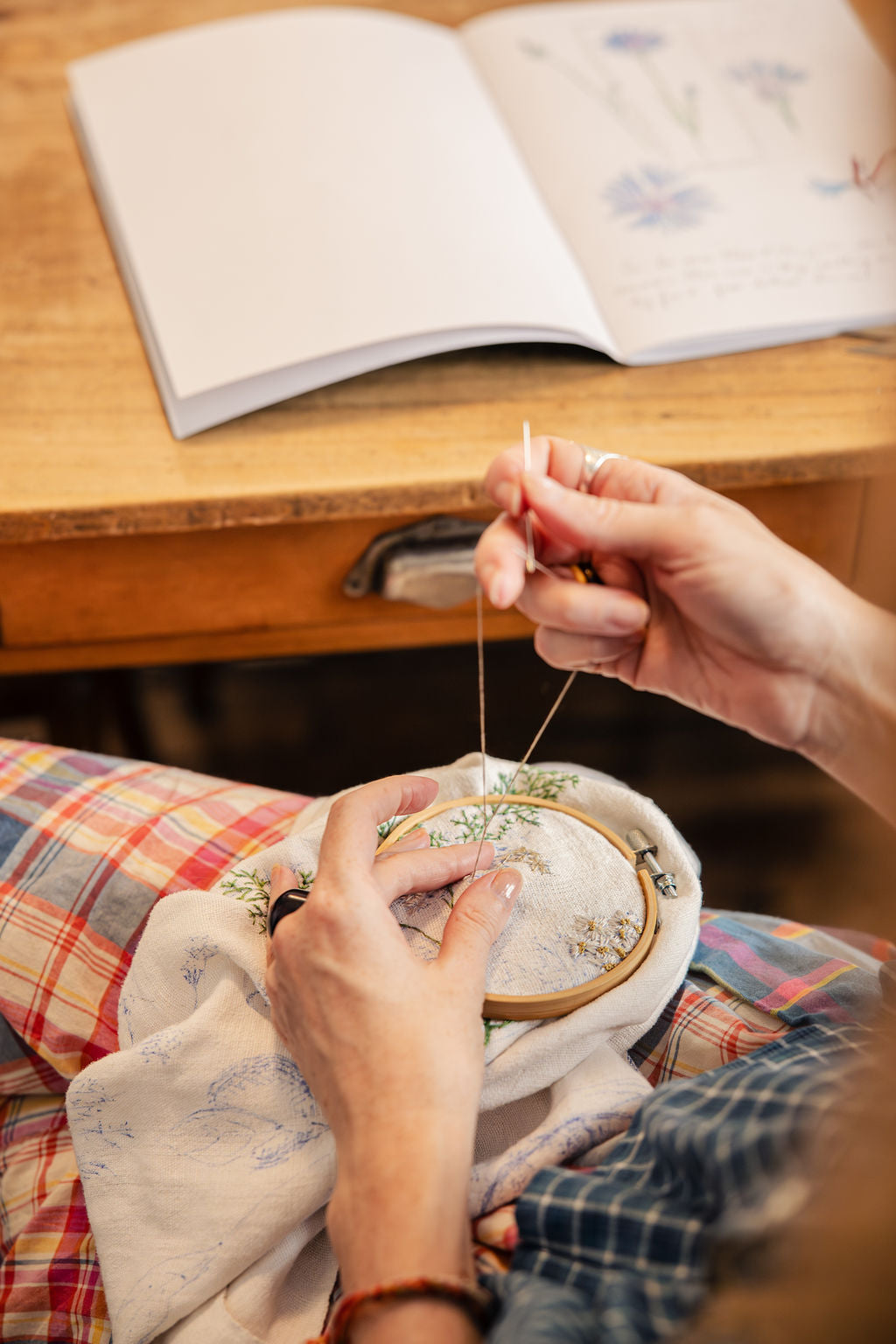
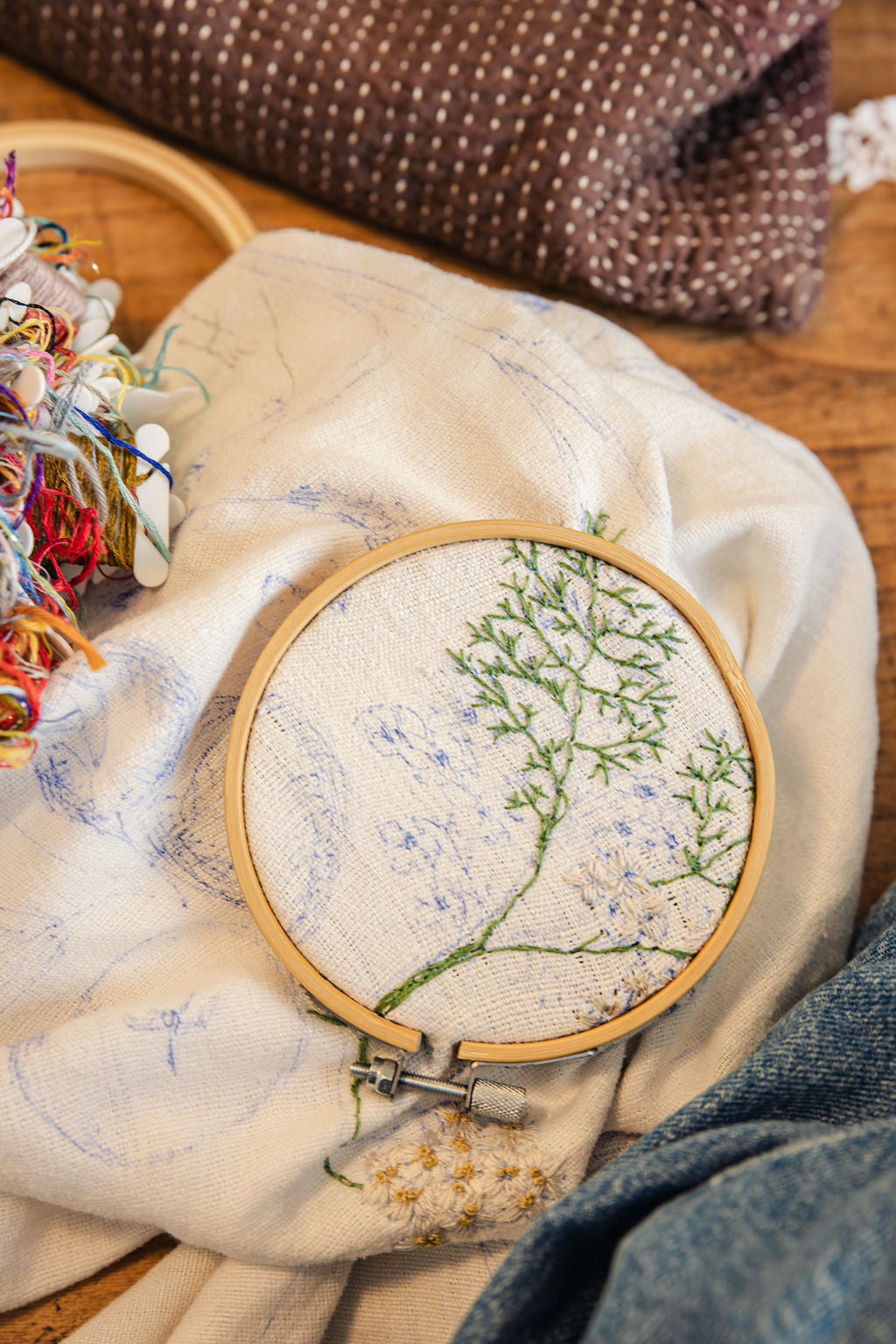
It really depends on whether I am working on commission or for myself. Beyond the graphic characteristics that attract me to a flower, it is above all the challenge it represents in embroidery. I don't do flat areas: I play a lot with the white of the fabric, with the outlines, with what is suggested rather than filled in.
Each flower becomes a visual problem to solve, almost a challenge in itself.
You embroider very specific species - daisies, poppies, daffodils, hellebores - do you work from plants you observe directly, or rather from botanical plates, images, or references?
It’s a mix of all that. Sometimes I’m lucky enough to have the flower right in front of me, sometimes I work from plates, illustrations, or photos. I tend to layer several sources: it’s almost like a collage. I create a sort of personal synthesis between different representations of the plant.

You often work from texts, poems, or novels. Do you ever start with a botanical name itself, from the poetic or memorial weight that a plant's name contains?
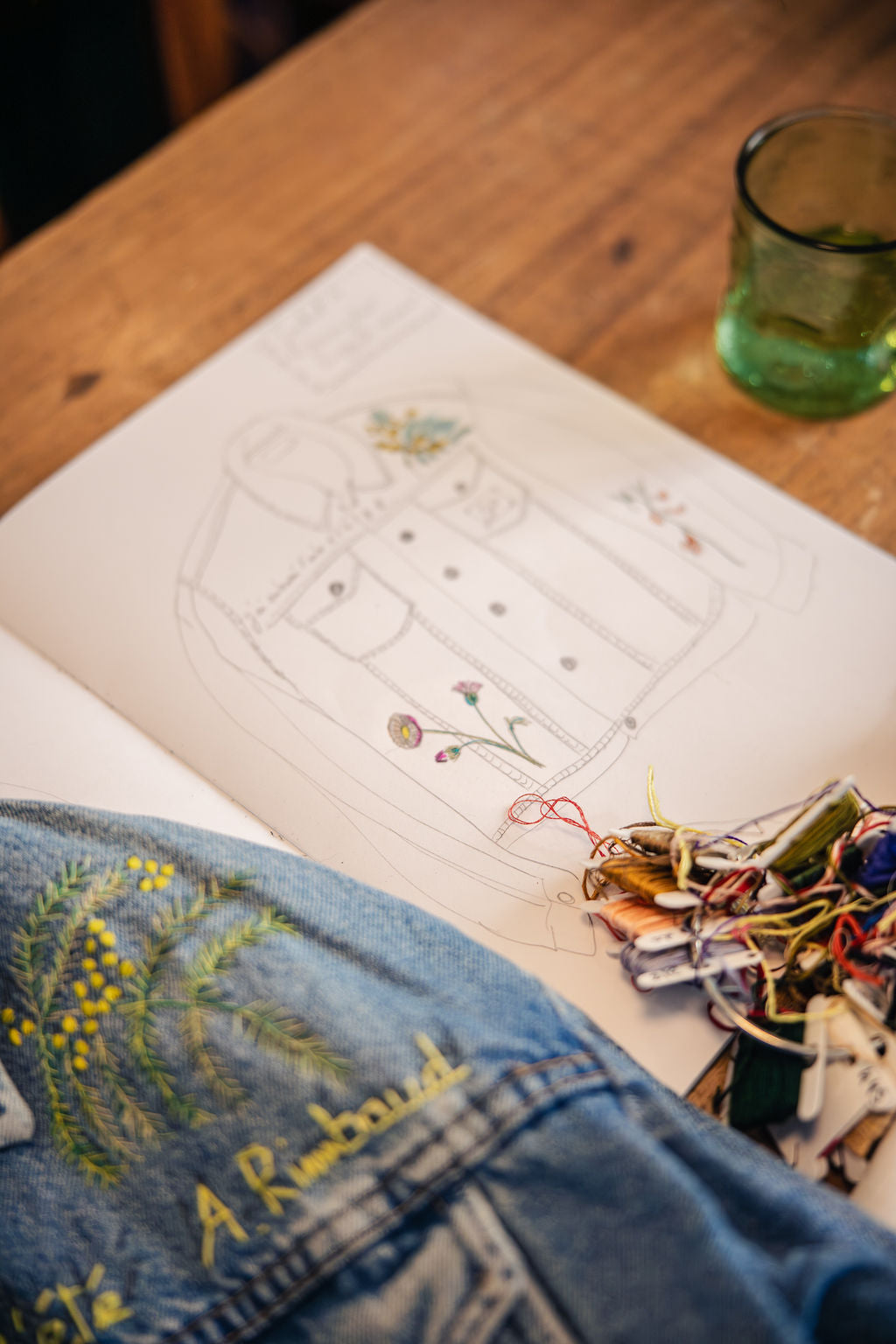
Yes, absolutely. In fact, I am currently working on a project centered on expressions that contain flowers, so the answer is clearly yes. Words are part of my background and my training. They often come to finalize the embroidery, whether it be a map, a cross-section, or an herbarium, which are some of my favorite themes.
Your embroidery often relies on antique fabrics that already have a
history. Do you view the plants you embroider in the same way?
What interests me greatly is the history of plants in the collective imagination.
Depending on their properties, their virtues, their colors, or their shapes, they are attributed very different symbolisms. Chrysanthemums, dandelions…
I really like this flower, for example, whose English name "dandelion" captures above all the shape of the leaf, which is, I find, much more poetic for such a singular, changing, and beautiful plant than the French, which has kept only a medicinal usage, almost reduced to its diuretic effect, "pisse-en-lit" (pee-in-bed).

Is the history of botanical embroidery, embroidered herbariums, and large antique silk plates a territory you explore?
Yes, of course, but in a fairly free way. I like to glean, almost intuitively, without having a too systematic approach. I mix eras, techniques, amateur practices, and more academic approaches.
What are your contemporary botanical sources of inspiration? Are there any artists or works today that particularly inform your perspective on plants?
I am very inspired by the artist Louise Despont and her unique, particularly floral, collages. And by my friend Emma Cassi, who embroiders intuitively and brings her fabrics to life by dyeing them in nature. These are very different practices, but they greatly nourish my perspective.
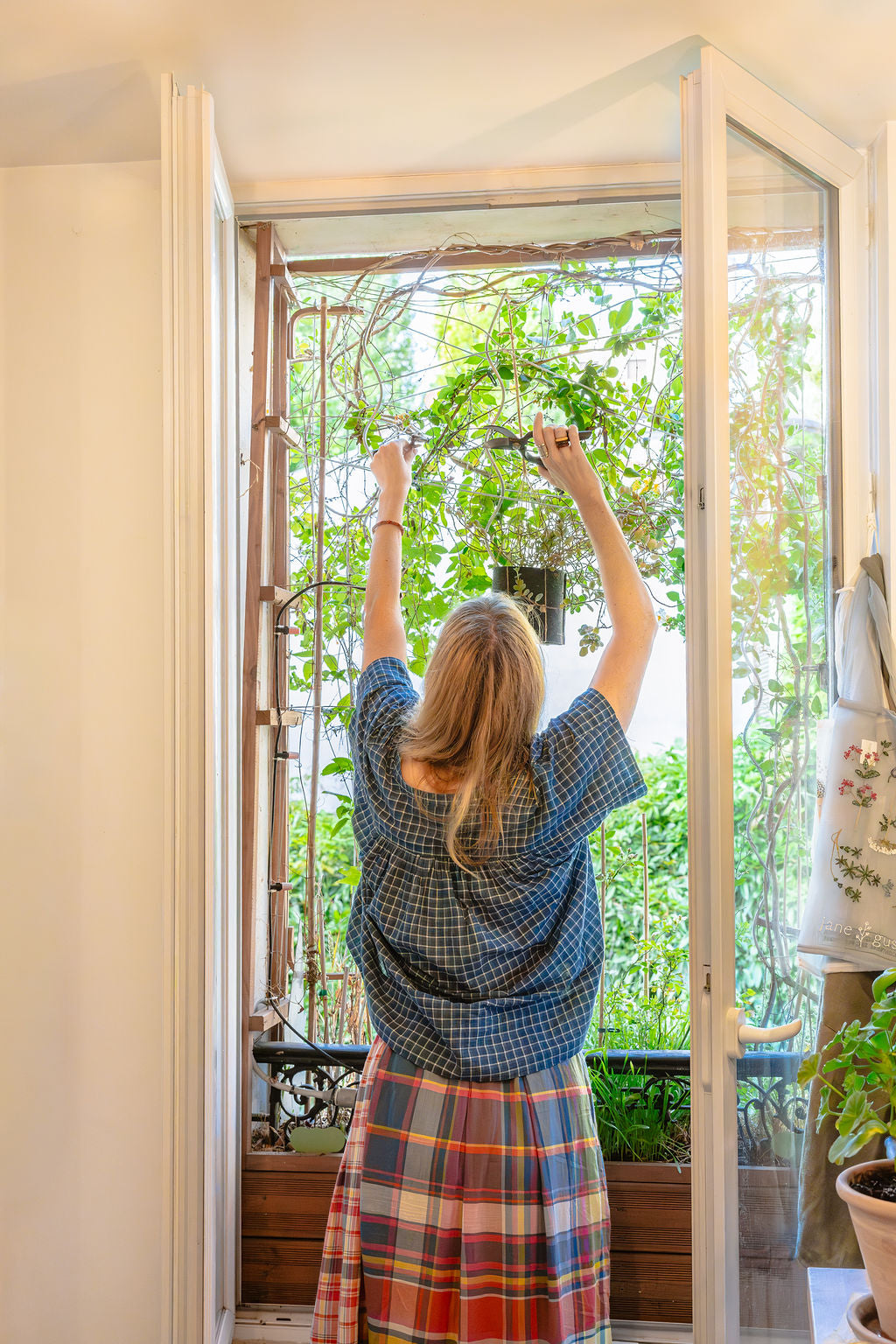

Audrey with the Sentei Japanese pruning shears
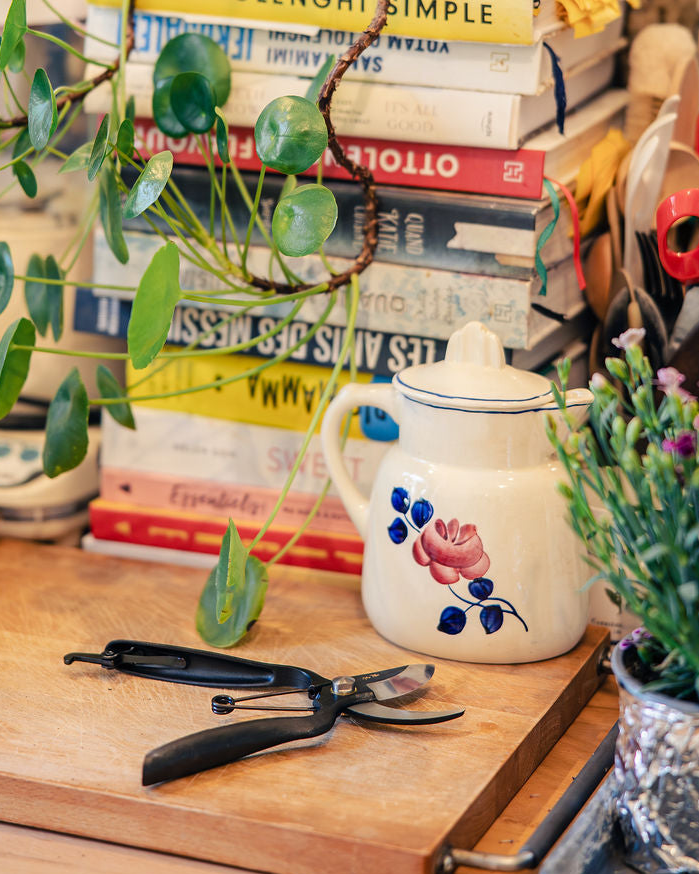
Which plants are living in your home right now? Is there one you are particularly attached to?
I had given my partner a Cornus kousa which, after six years of faithful service, seems to have given up the ghost, likely attacked by a parasite.
It was a real little tragedy for me. A plant is a companion, a good-luck charm, a daily pleasure. When they disappear, it is never trivial. I am very attached to symbols, need I say?
Is there a scent, a texture, or a sensory detail related to plants that comes up often in your daily life or your work?
I really love very green scents, like that of a fig leaf, for example. And that of the rose too, very well-known, almost overused, and yet still surprisingly subtle and precise. There is also the sweet, almost candy-like scent of violets, which takes me back to my grandmother Cécile and my great-grandmother Irma, for whom it was the favorite flower.
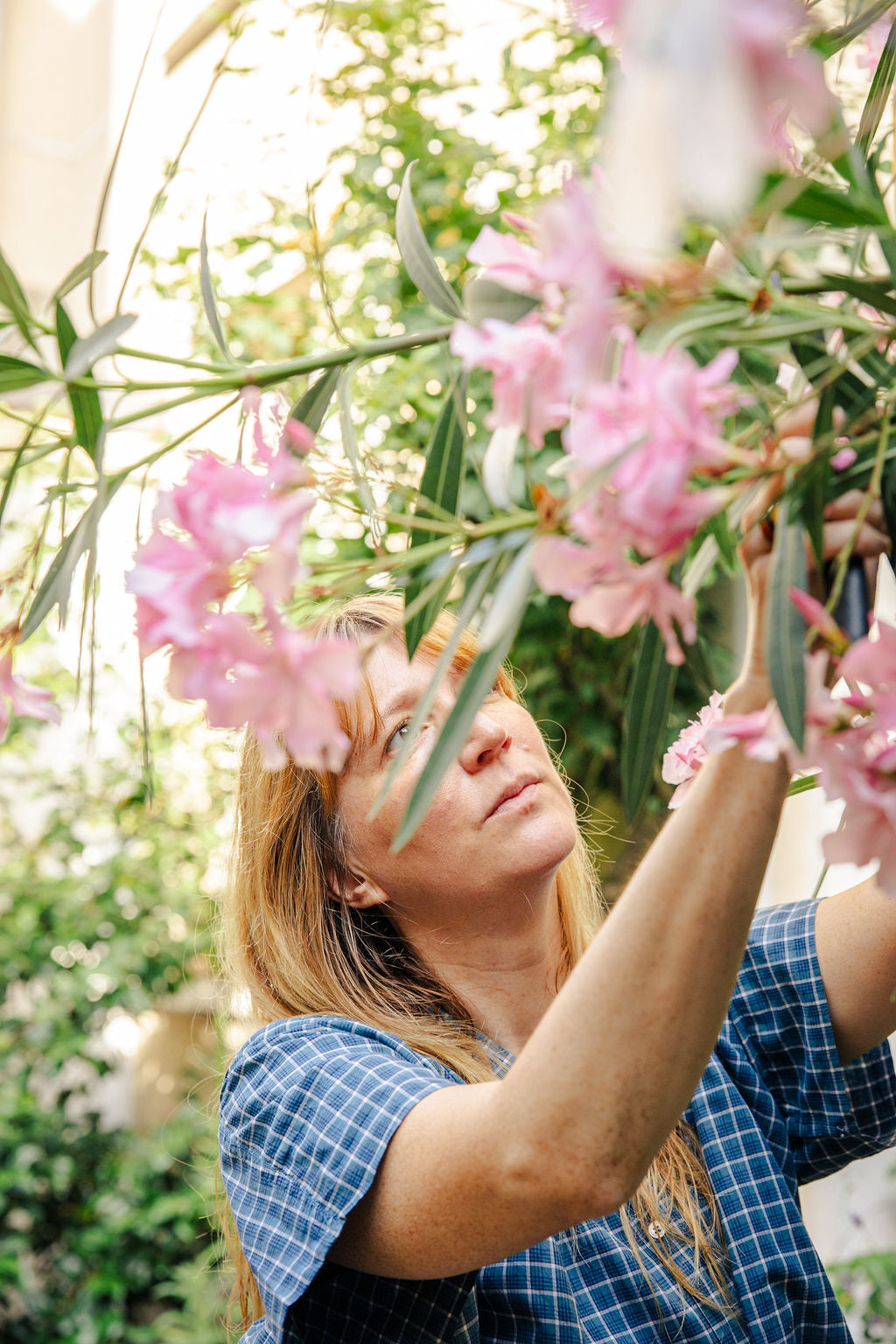

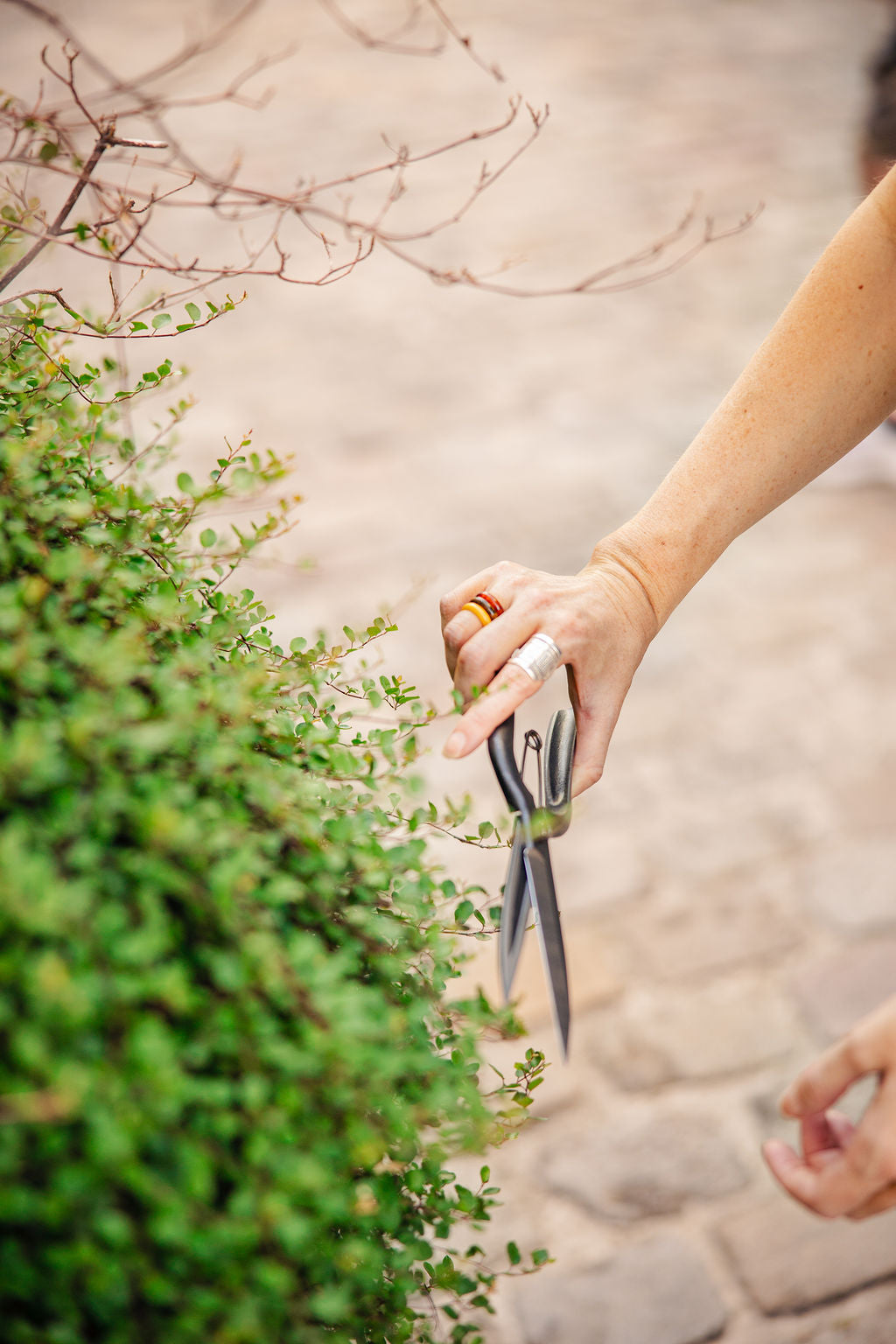
Audrey with the galvanized metal watering can and the Japanese topiary shears.
Is there anyone whose interview you would like to read in this botanical encounter format?
Why not Alice Roca, who knows how to put the garden on her plate with whimsy, creativity, and precision, and that is no small feat.
Thank you very much Audrey for taking the time to answer our questions.
© Photographs by Eléonore Wallet. All rights reserved, reproduction prohibited.