
Botanical explorations
Frankfurt's Palmengarten, a botanical ambition
The Palmengarten, Frankfurt's large botanical garden, was born from a unique historical context.
In 1866, the Duchy of Nassau was annexed by Prussia. Duke Adolph of Nassau then had to part with his possessions, including his summer residence and his remarkable collection of exotic plants, one of the most important in Europe.
Tasked with finding a buyer, gardener Heinrich Siesmayer conceived an unprecedented project: to create a garden in Frankfurt dedicated to these plants from elsewhere.
The venue opened in 1871, funded by a system of shares subscribed by the city's notables.
From its inception, the Palmengarten has been organized around its greenhouses, designed as places for strolling.
Our visit in February focused on the Palmengarten's two large greenhouses.
The Palm House
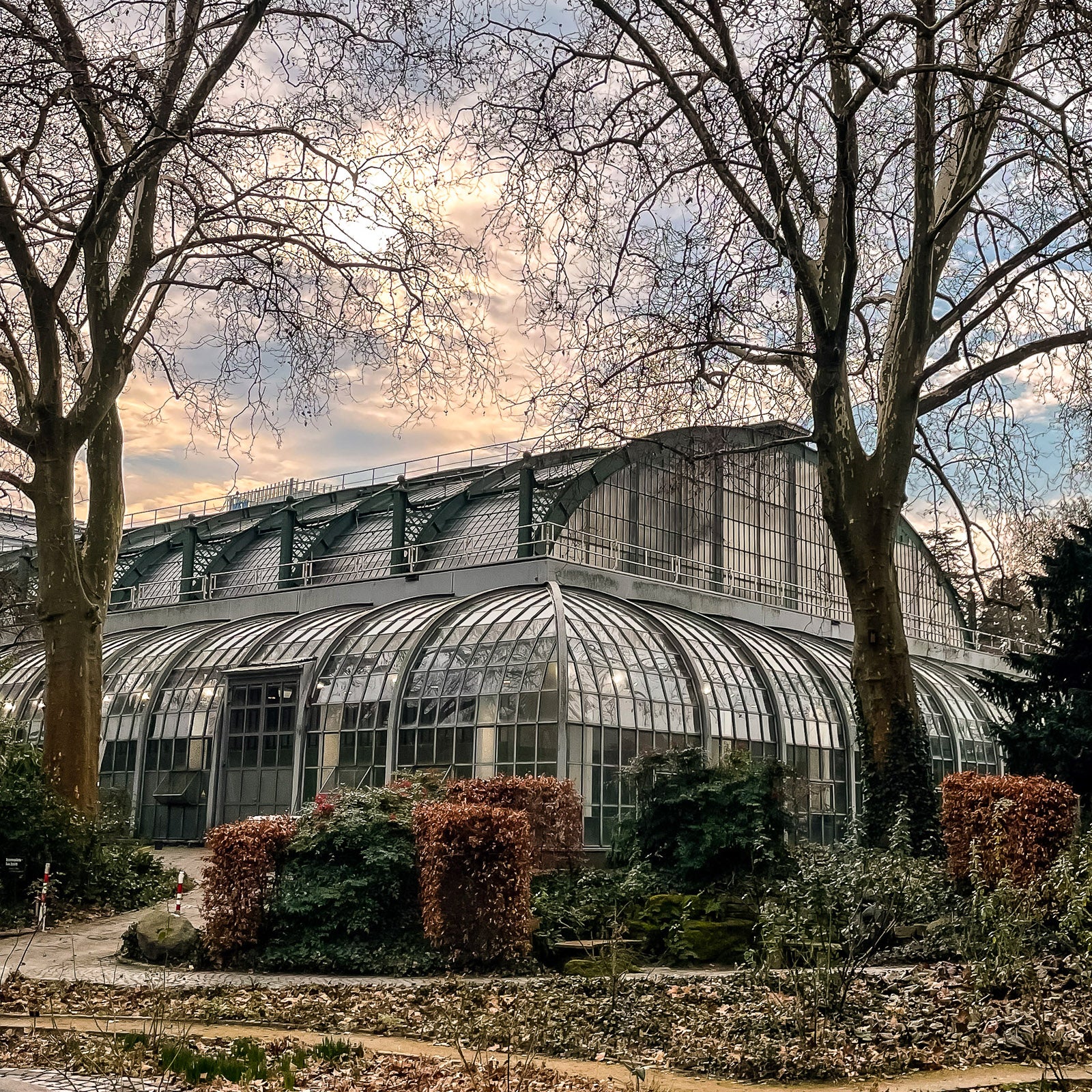
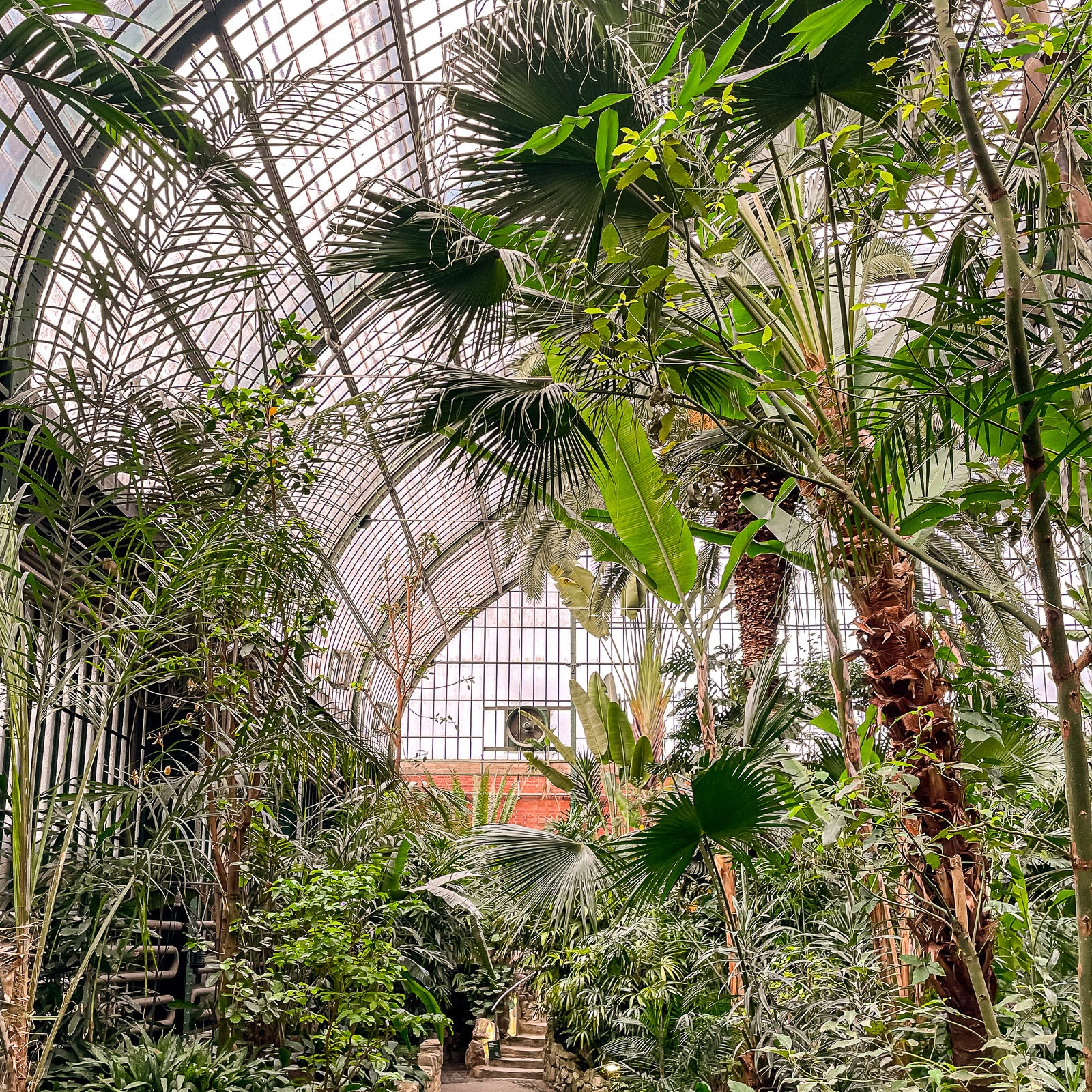
Built in 1869 by the architect Friedrich Kaysser, this imposing 18-meter-high greenhouse was the largest in Germany, before the Berlin greenhouse took over in 1907.
It is inspired by the models of the time, notably the Palm House at Kew in London (1846) and the architectural innovations of the Paris Universal Exhibition (1867).
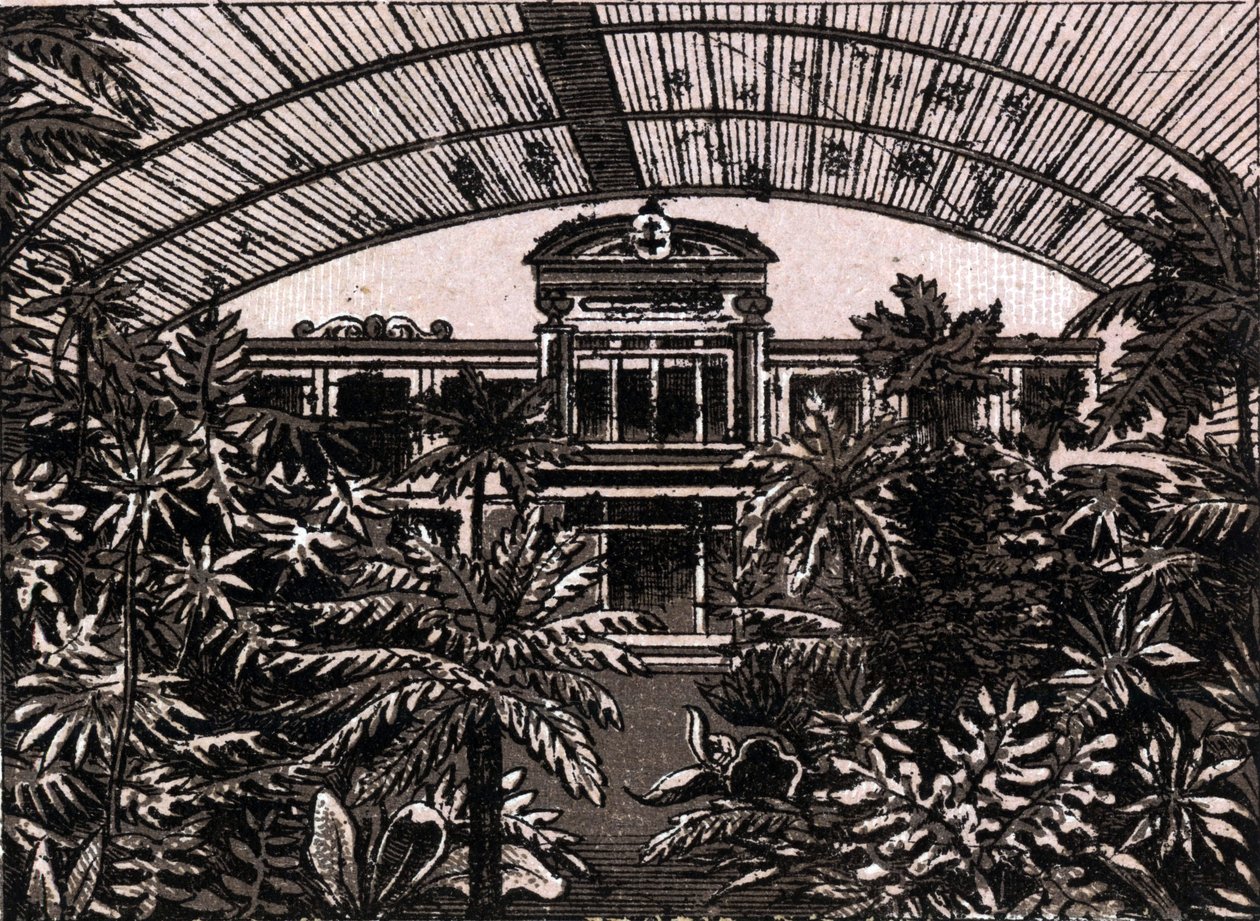
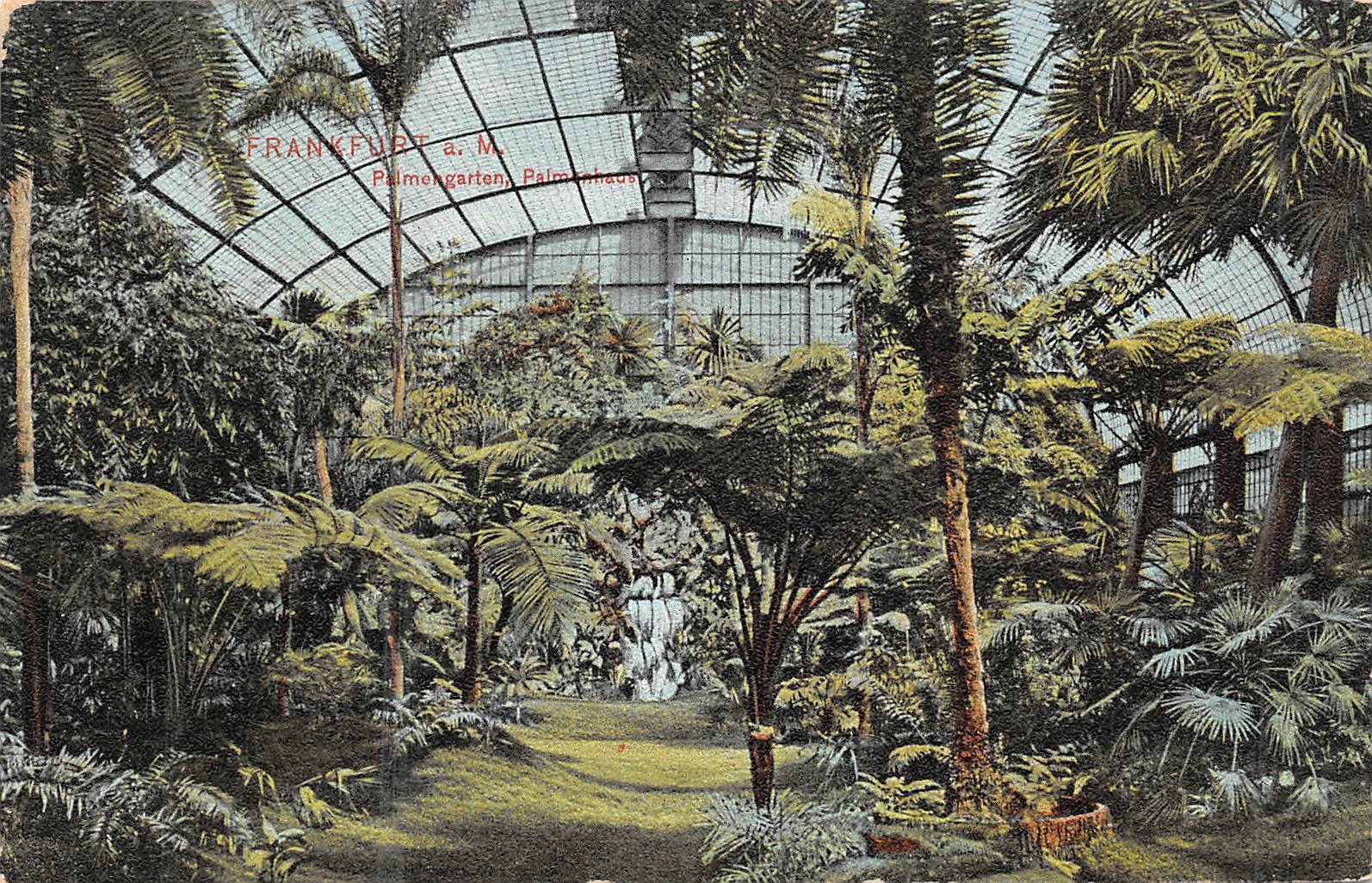
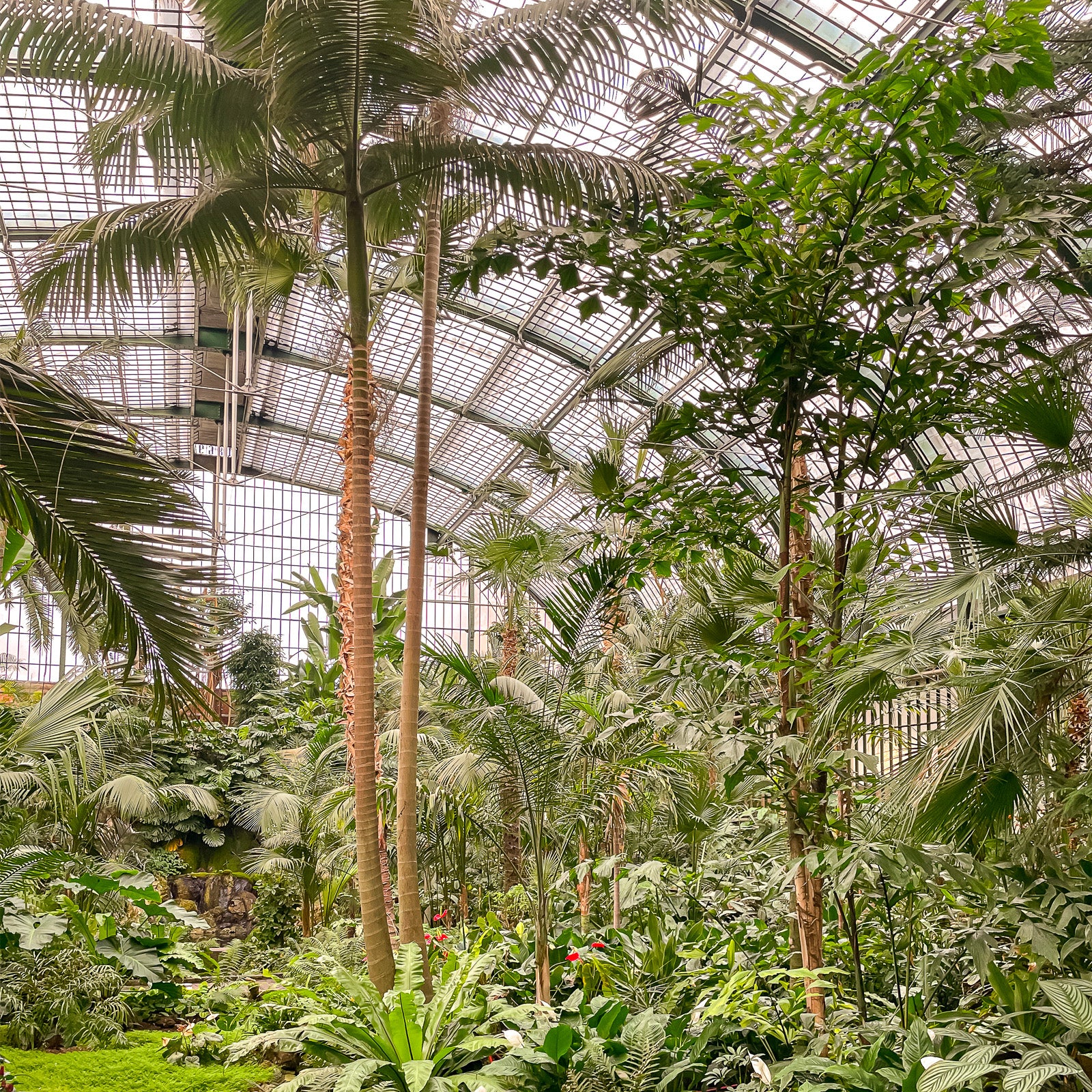
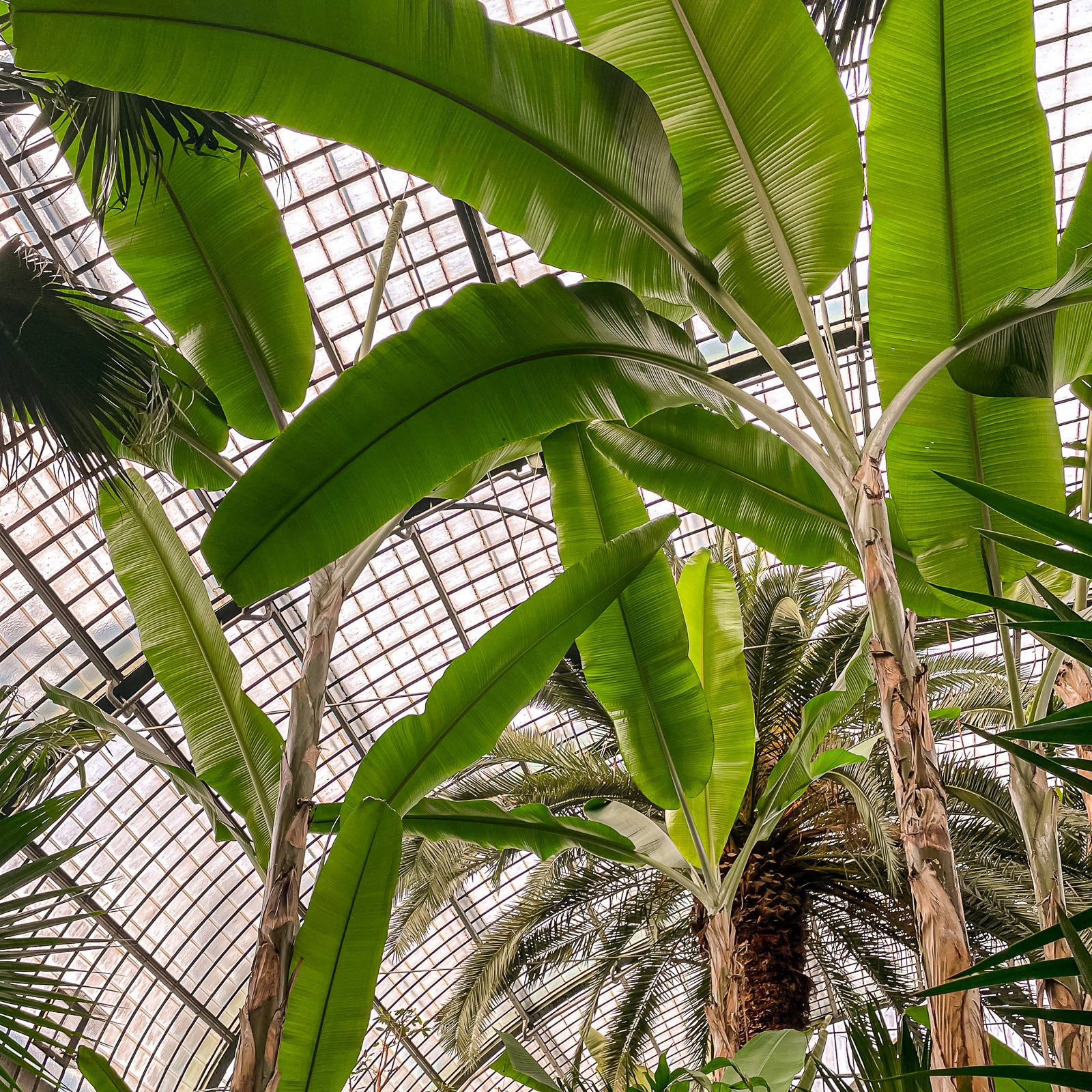
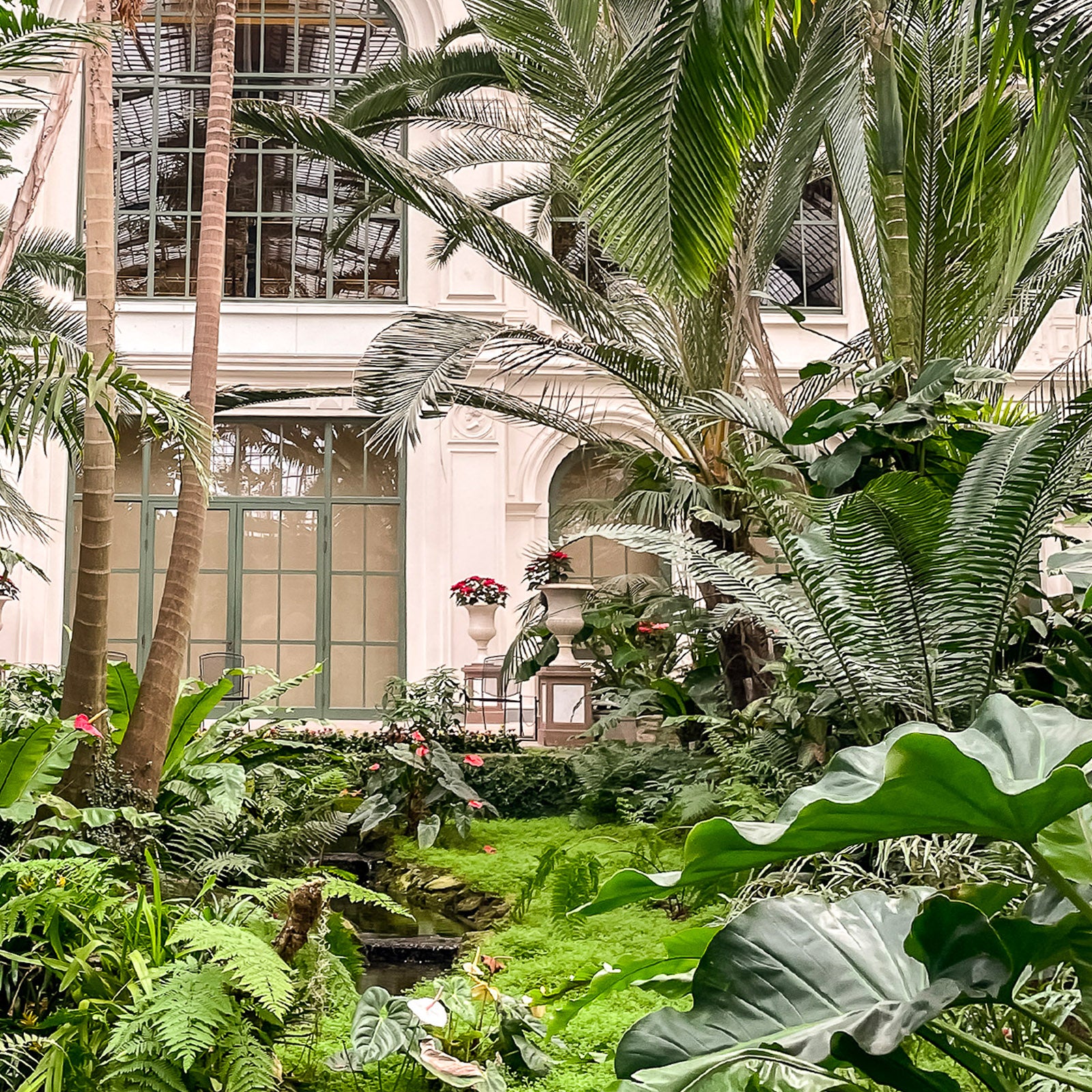
Its iron and glass structure lets in plenty of light. Under the central nave, the atmosphere is calm. Tall Howea and Phoenix palm trees rise towards the glass roof, while monsteras and ferns occupy the ground and the edges of the rockeries.
The Tropicarium
Inaugurated in 1987, the Tropicarium is the work of architect Hermann Blomeier. Its architecture is inspired by the cross-section of a cactus, with a geometric plan composed of interconnected volumes. The building unfolds across several communicating greenhouses, organized around a central axis.
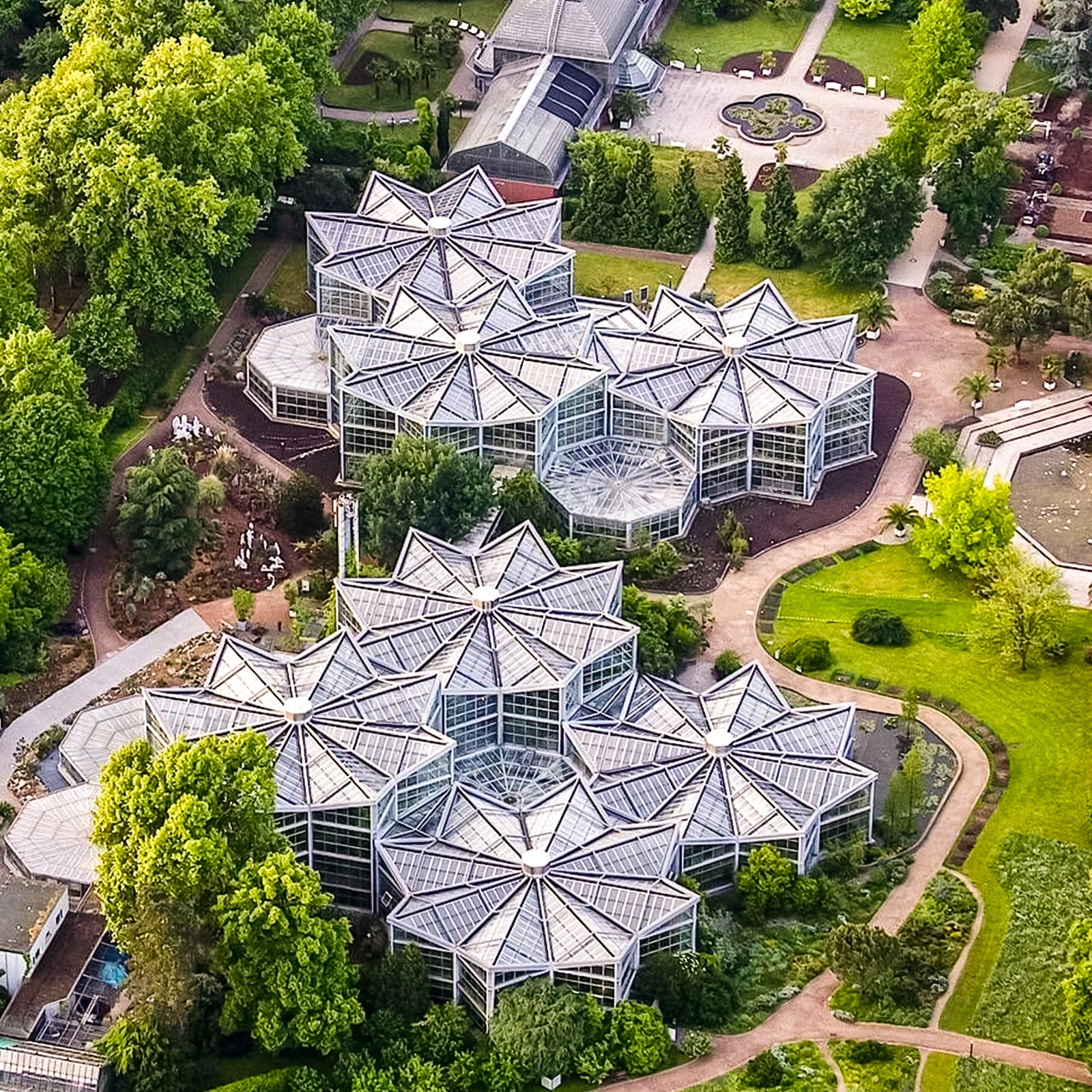
The atmosphere there is warmer and more enveloping than in the Palmenhaus. The journey alternates between humid spaces, where the air is saturated with mist and the vegetation is dense, and drier areas, with more graphic lines, bathed in direct light.
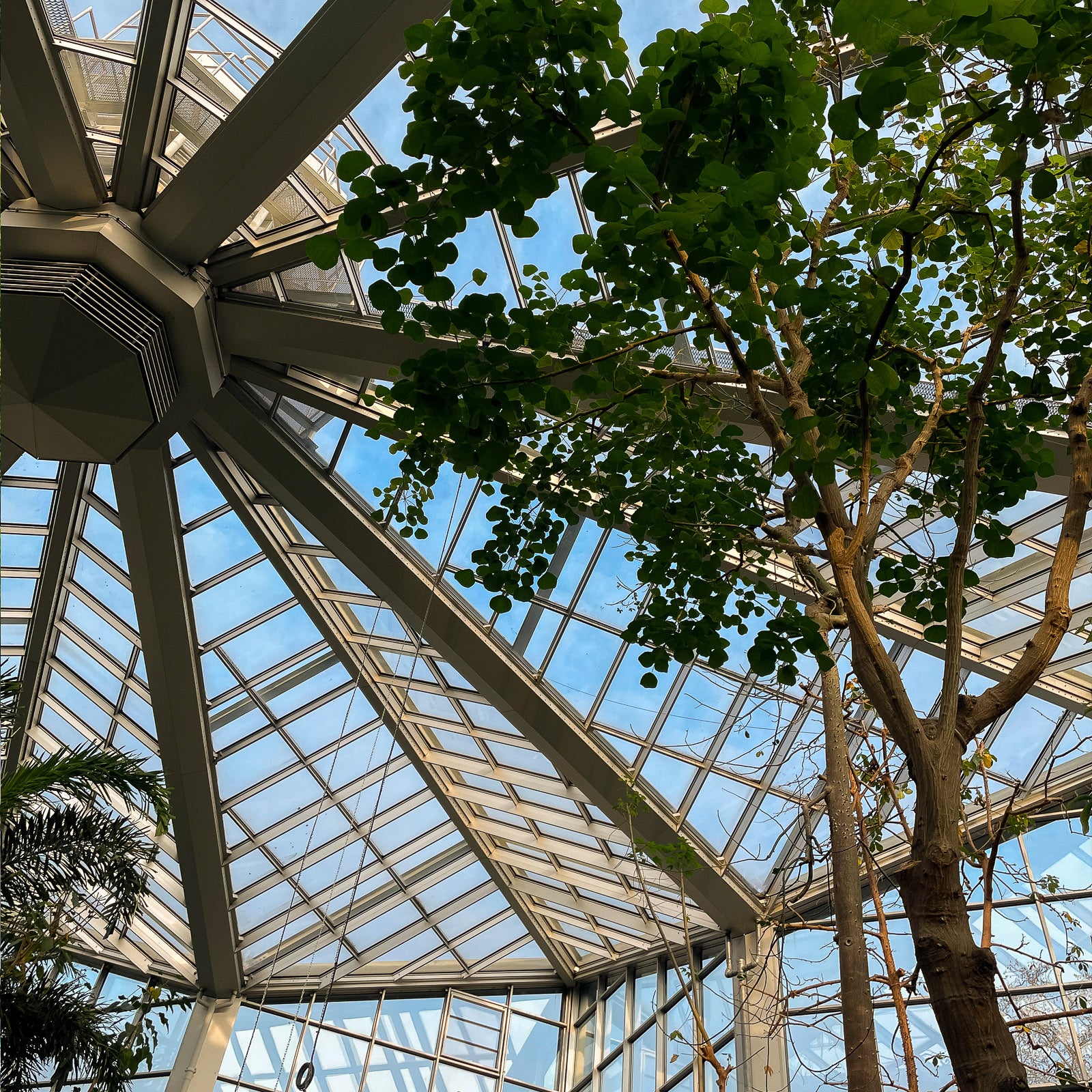
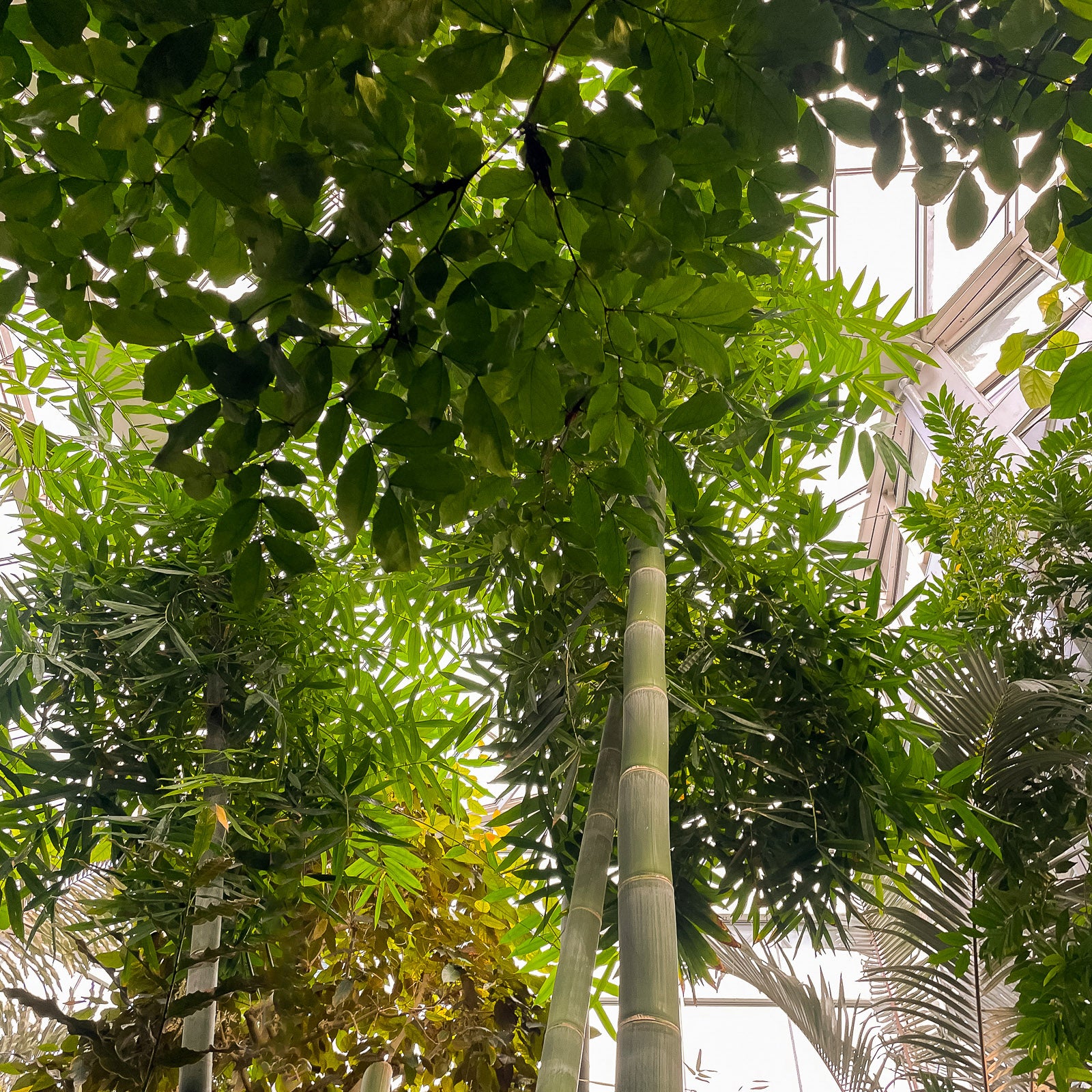
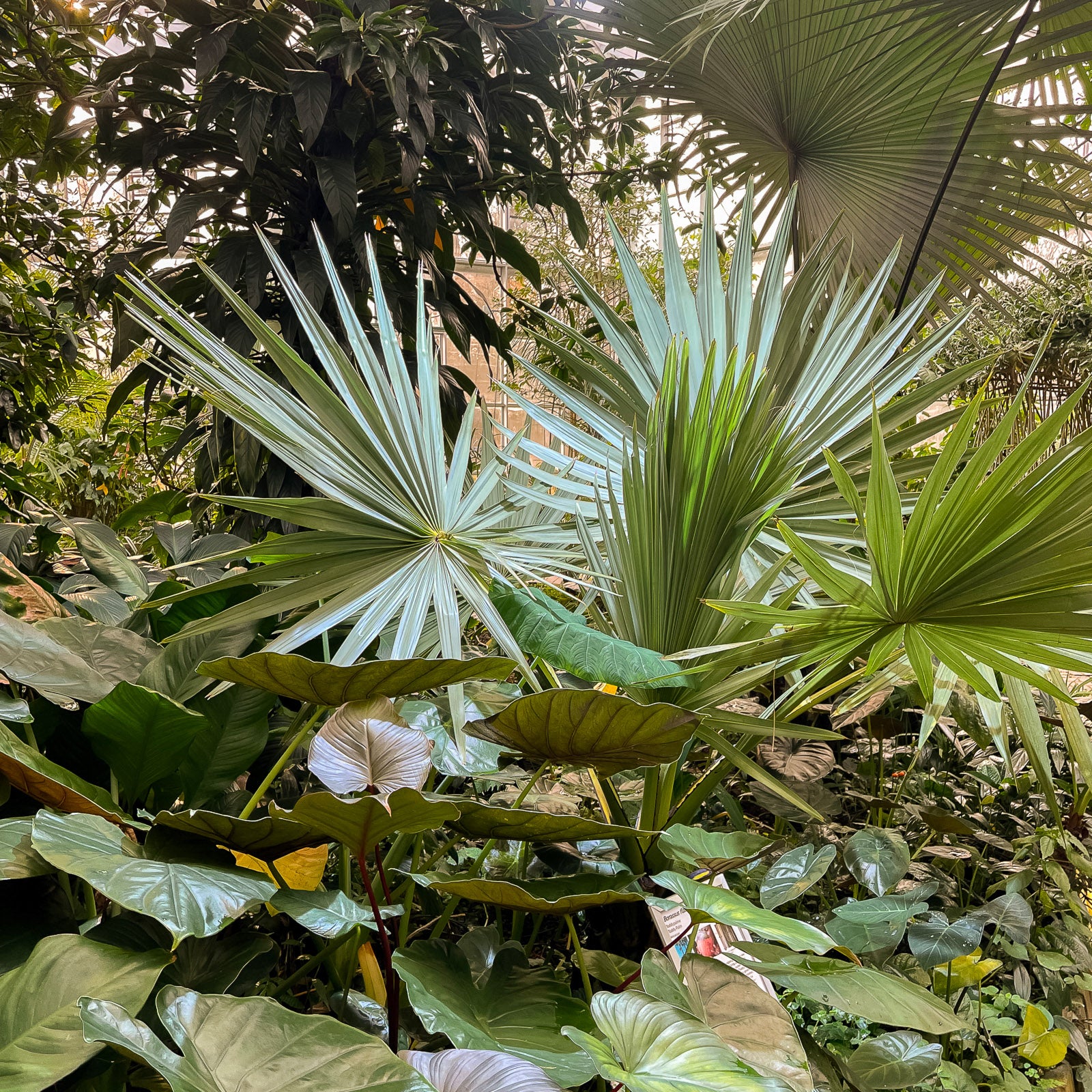
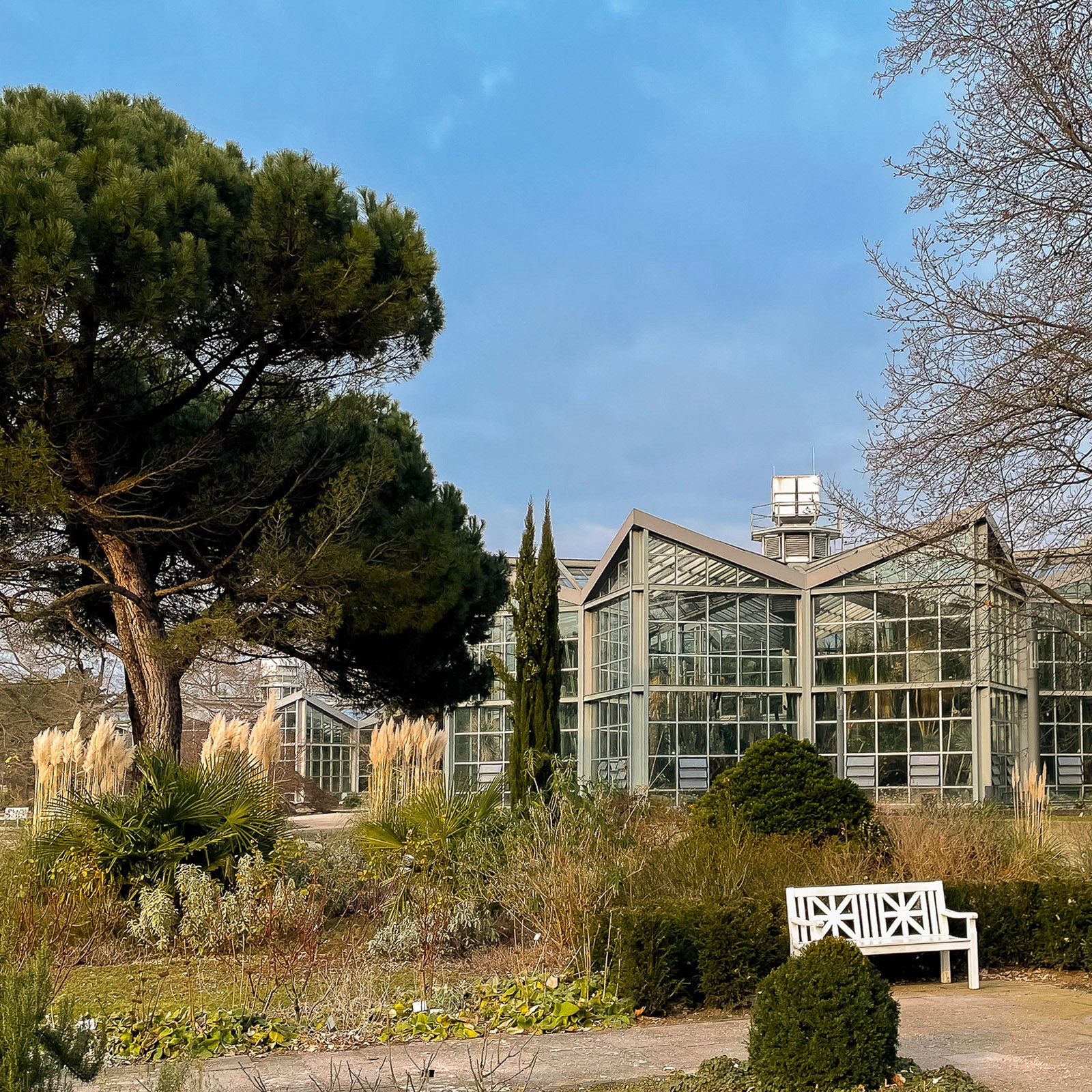
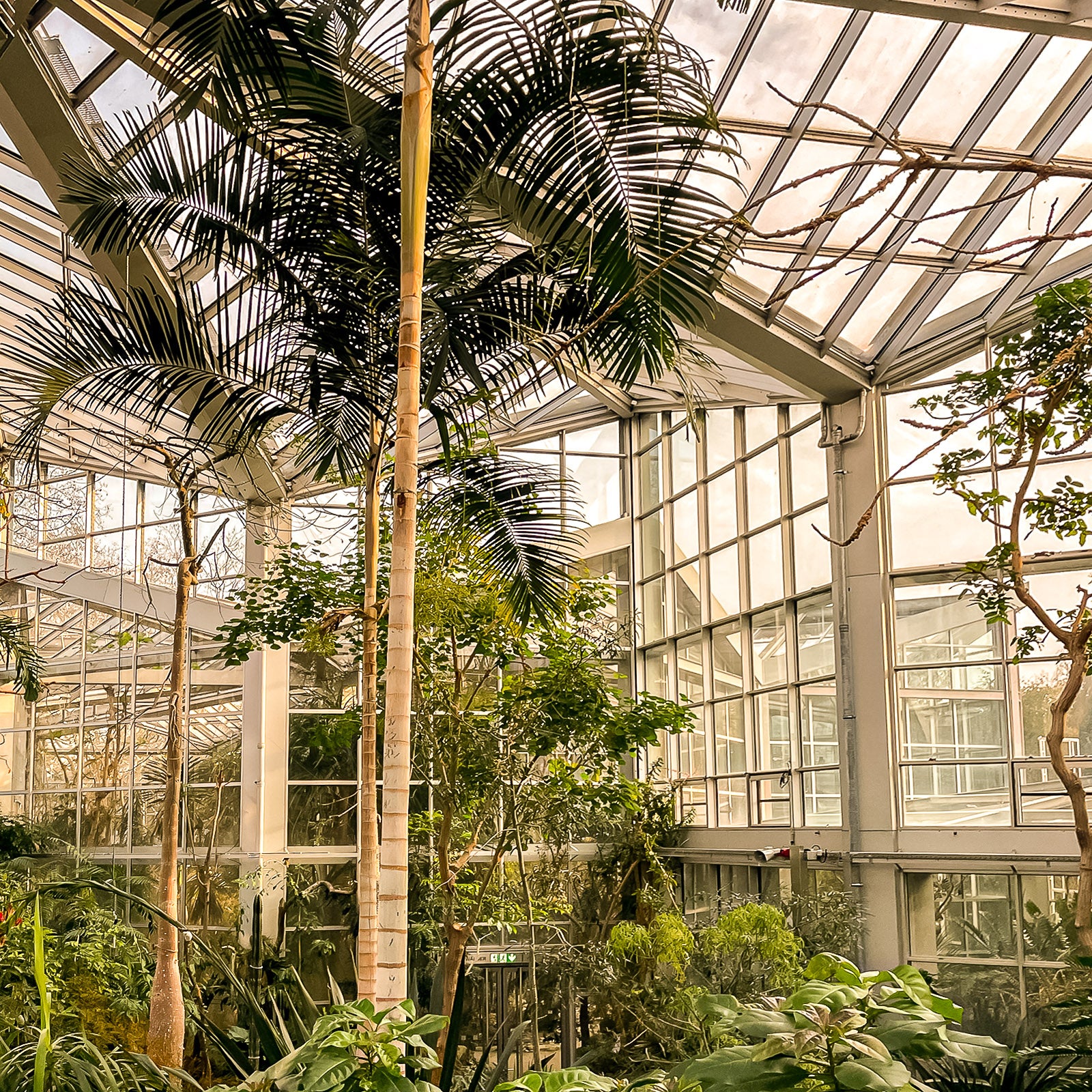
Since its opening in 1871, the Palmengarten has held a unique position among Europe's great botanical gardens. Conceived from the outset as a place open to the public, its greenhouses, both old and contemporary, bear witness to this ambition: to offer conditions adapted to plants from other climates while providing a true visitor experience.
Through the Palmenhaus and the Tropicarium, the Palmengarten also tells the story of the evolution of greenhouses over the centuries, from the grand iron and glass architecture of the 19th century to the more geometric forms of the late 20th century.
A garden that, beyond its plant collection, stands out as a place for walking, observation, and education, right in the heart of the city.
As we leave, we're already imagining another visit in spring, to discover the garden in a different light.
Palmengarten Frankfurt
Siesmayerstraße 63
Frankfurt am Main, Germany